
Shuttlecock speed chart (74–79): temperature, altitude and baseline test guide
Select speed 77 for standard sea-level badminton halls at 16–22°C, speed 76 for warm courts at 23–29°C or moderate elevation (500–1,200 m), and speed 78 for cold winter halls at 8–15°C. Every 5–6°C rise in air temperature or 500 m increase in elevation lowers air density enough to step down one speed number.
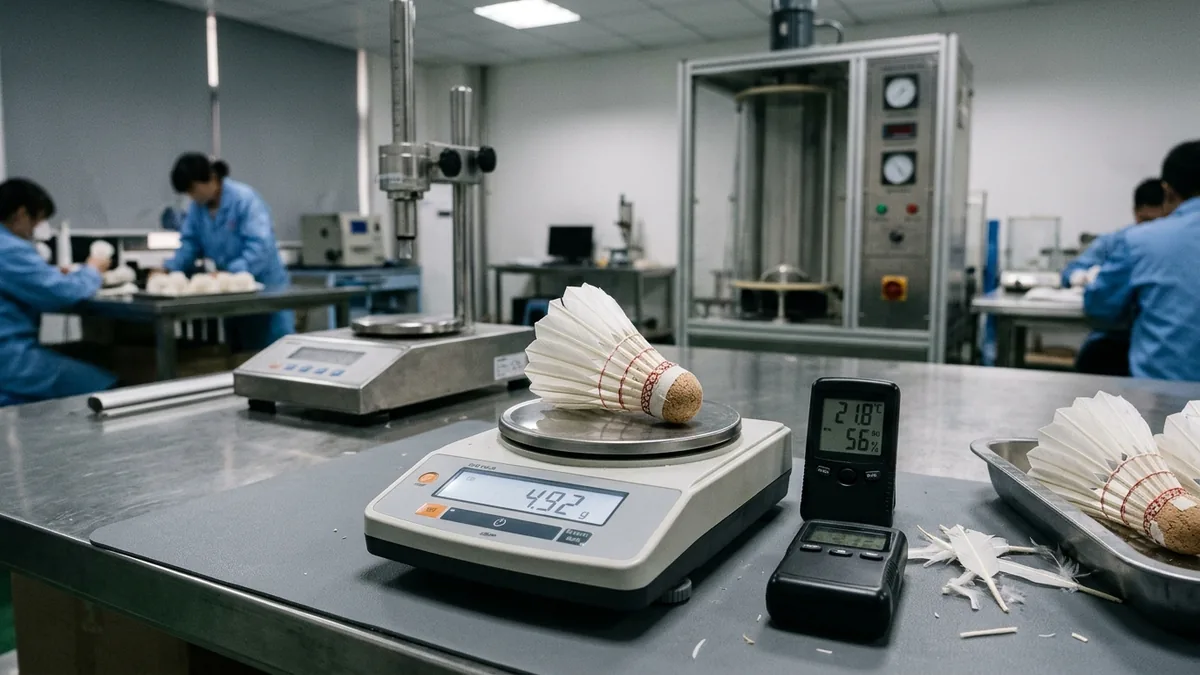
Shuttlecock speed 74–79 conversion chart by temperature & altitude
Factory reference matrix used by our Jiangshan export team when configuring speed numbers for global wholesale shipments.
| Speed | Weight equivalent | Hall temperature | Elevation range | Target landing zone & typical regions |
|---|---|---|---|---|
| 74 | 4.7 g (extra slow) | 28–34°C | 1,500–2,400 m | 530–990 mm inside baseline · High-altitude plateaus (Mexico City, Bogota, Kunming) |
| 75 | 4.8 g (slow) | 26–33°C | 800–1,500 m | 530–990 mm inside baseline · Hot tropical halls & mid-altitude plateaus |
| 76 | 4.9 g (medium-slow) | 23–29°C | 300–800 m | 530–990 mm inside baseline · Southeast Asia (ID, MY, TH, VN) & summer halls |
| 77 | 5.0 g (standard) | 16–22°C | 0–400 m | 530–990 mm inside baseline · Temperate sea-level courts (Europe, US, East Asia) |
| 78 | 5.1 g (medium-fast) | 8–15°C | 0–300 m | 530–990 mm inside baseline · Unheated winter halls in Northern Europe, JP, KR & North America |
| 79 | 5.2 g (fast) | 2–8°C | 0–200 m | 530–990 mm inside baseline · Sub-10°C winter training gymnasiums |
How air temperature, altitude and humidity change shuttlecock flight distance
Aerodynamic drag on a 16-feather skirt is directly proportional to ambient air density. Warmer air and higher elevation thin out air molecules, allowing the shuttlecock to travel 35–60 cm farther on the same full underhand stroke.
Temperature effect (±6°C = ±1 speed)
When hall temperature rises from 18°C to 26°C, air density drops by roughly 2.7%. A speed 77 shuttlecock will fly 40–55 cm longer and sail past the baseline unless you switch down to speed 76.
Altitude effect (+600 m = -1 speed)
Barometric pressure falls by about 6–7% per 600 m of elevation. Courts at 1,000 m require speed 75 or 76 even at 20°C so full clears stay inside the 13.40 m court length.
Air conditioning & draft control
Strong HVAC blowers cool the hall (requiring a faster speed) while humid tropical courts without AC increase moisture uptake in feathers by 0.05–0.10 g after 15 minutes of play.
How to perform the official baseline speed test on your court
Before opening bulk cartons for a tournament or club night, test 3 shuttlecocks after letting tubes acclimate to court temperature and 55%–65% RH for at least 2 hours.
Step 1: Full underhand contact over the back line
Stand directly behind the back boundary line and strike the shuttlecock with a full underhand stroke at an upward angle of 40–45 degrees, keeping impact above the back line.
Step 2: Measure the 530–990 mm landing zone
A correct-speed shuttlecock lands between 530 mm and 990 mm short of the opposite back boundary line (inside the doubles long service testing marks).
Step 3: Seasonal split-speed ordering for clubs
If test shuttles land less than 530 mm from the back line, step down one speed number; if they land more than 990 mm short, step up one speed number or split your carton order by season.
Catalog models featured in this guide
Compare indicative USD EXW reference pricing per tube, save models to your inquiry list, or request 3 free play-test shuttlecocks.
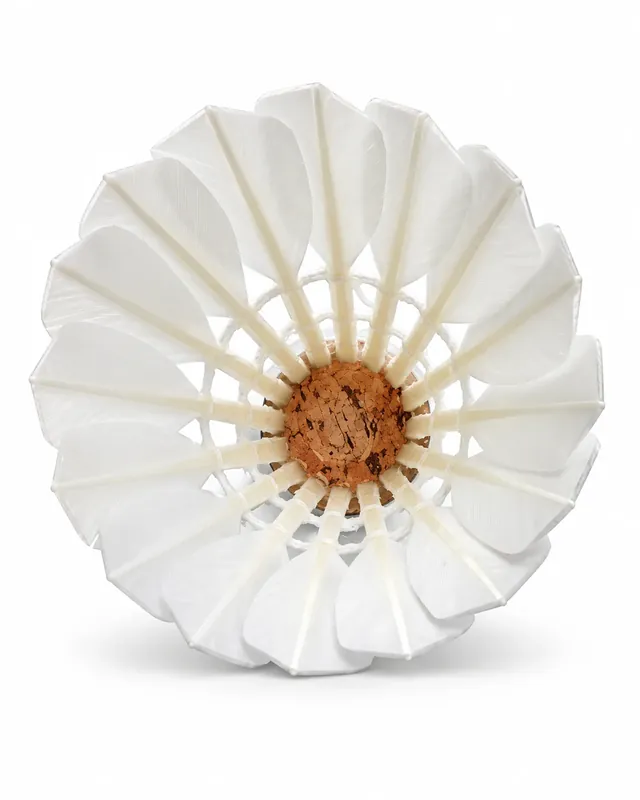
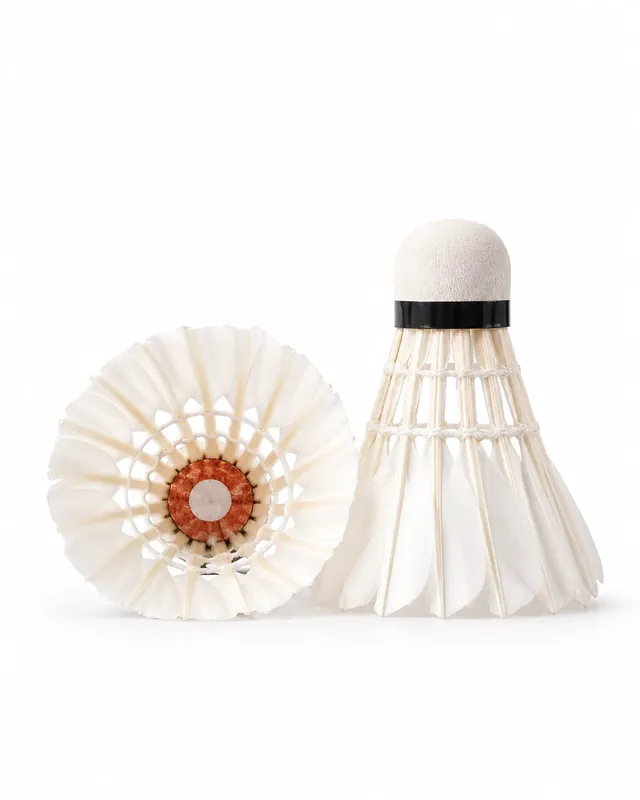
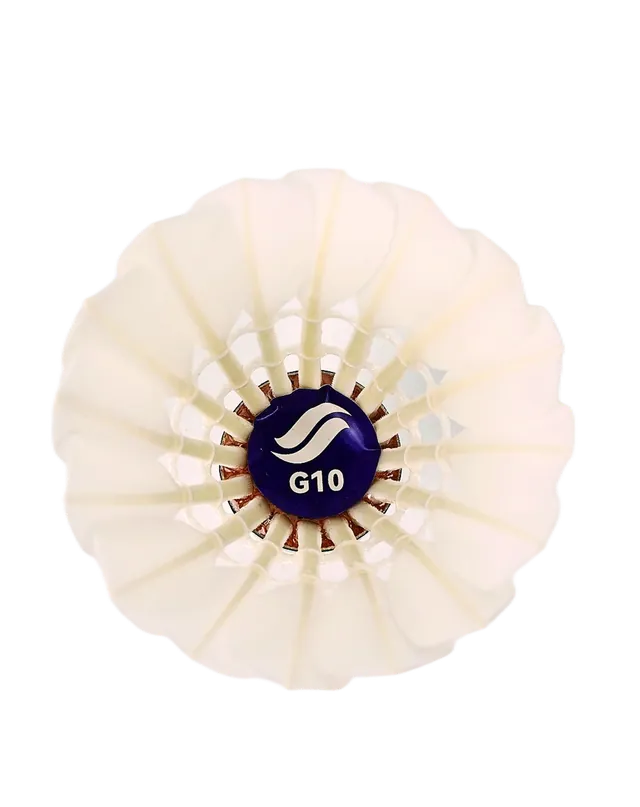
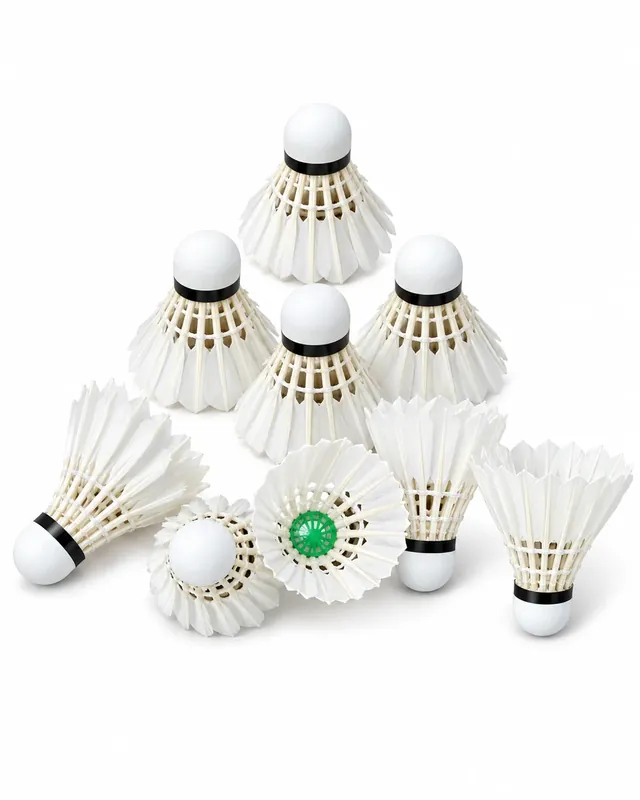
Feather material questions
What is the difference between speed 76 and speed 77 shuttlecocks?
Speed 76 is calibrated for warmer air (23–29°C) or mild elevation (300–800 m) and flies 35–50 cm shorter than speed 77 in the same hall, preventing clears from sailing out in summer or tropical courts.
Can we mix speed 76, 77 and 78 within a single wholesale order?
Yes. You can split speeds by tube or by 50-tube master carton across any of our 80 catalog models so your club has summer (76), spring/autumn (77) and winter (78) stock ready.
How do speed numbers 76, 77 and 78 map to Japanese 2, 3 and 4 markings?
Speed 76 corresponds to #2 (summer, 22–28°C), speed 77 corresponds to #3 (spring/autumn, 17–23°C), and speed 78 corresponds to #4 (winter, 12–18°C).
Can we play-test two different speeds before placing a bulk order?
Yes. Request 3 free play-test shuttlecocks (buyer pays courier shipping) and specify two target speeds so you can run the baseline landing test in your own hall.
Continue reading related factory guides
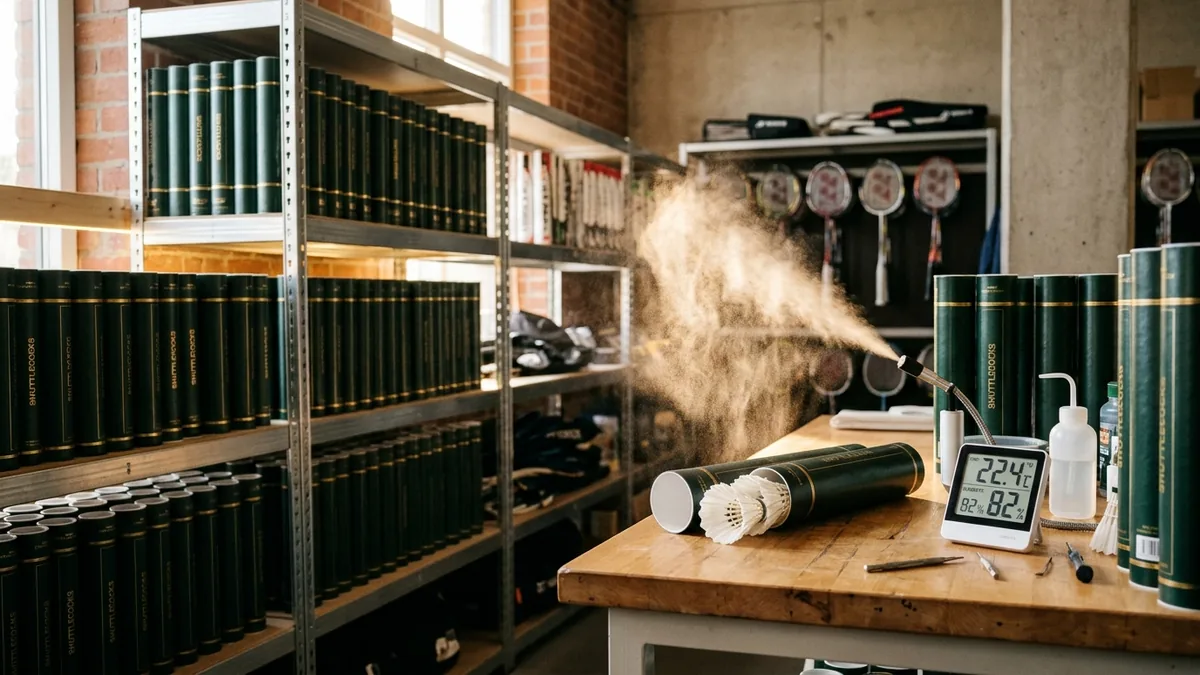
How to store and humidify feather shuttlecocks: 55%–65% RH club & warehouse guide
Learn how to store and humidify goose and duck feather shuttlecocks at 55%–65% RH and 15–25°C to prevent brittle shafts and extend rally durability.
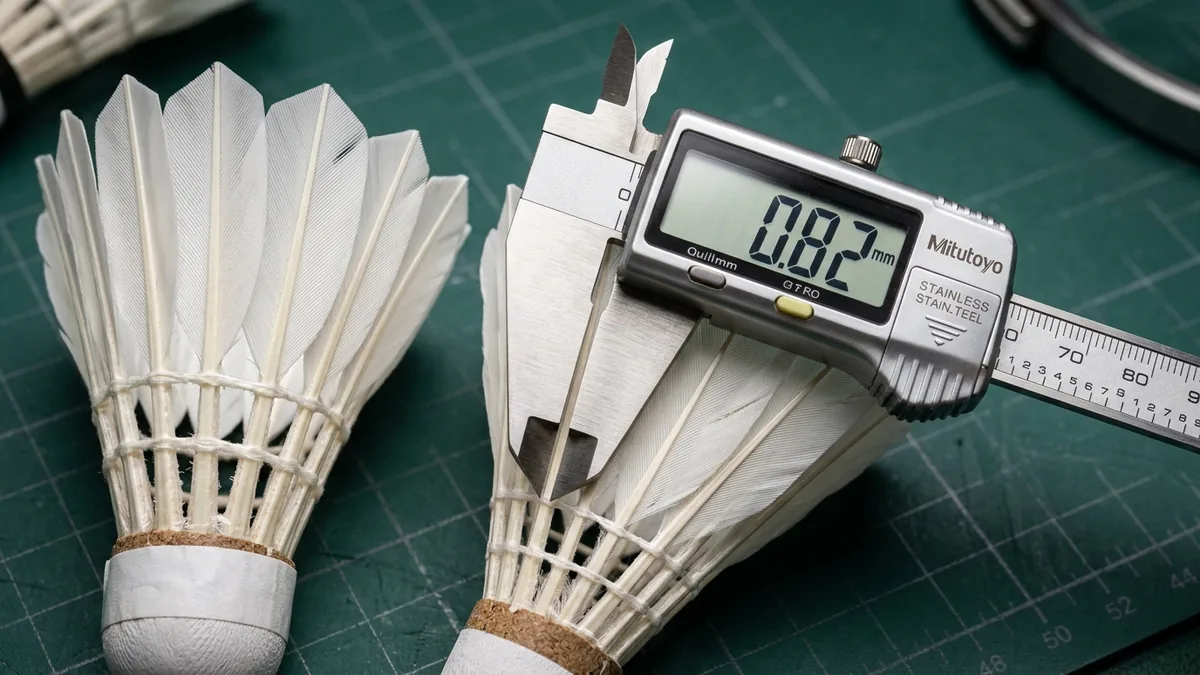
Goose vs duck feather shuttlecocks: anatomy, durability and club cost comparison
Compare goose vs duck feather shuttlecock durability, shaft anatomy, Mulard/Cigu/Teng species differences and cost-per-set across 80 factory models.
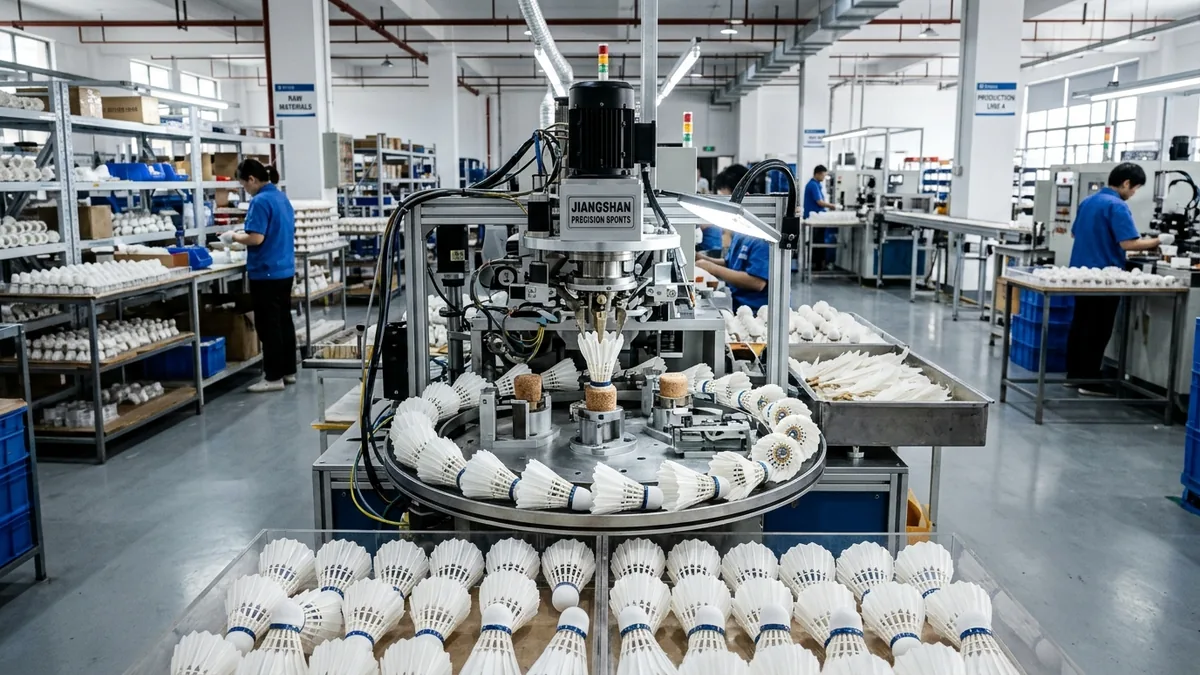
How badminton shuttlecocks are made: 6-stage Jiangshan factory process and QC standards
Inside our Jiangshan shuttlecock factory: see the 6-stage manufacturing process from 16-feather wing sorting and 25.5° cork drilling to flight and speed QC.