
How to store and humidify feather shuttlecocks: 55%–65% RH club & warehouse guide
Store natural goose and duck feather shuttlecocks upright in sealed tubes at 55%–65% relative humidity (RH) and 15–25°C, away from heaters or direct sunlight. In dry winter halls below 40% RH, lightly humidify tubes for 15–30 seconds with cool mist 24–48 hours before play so keratin shafts recover flexibility without softening the cork adhesive.
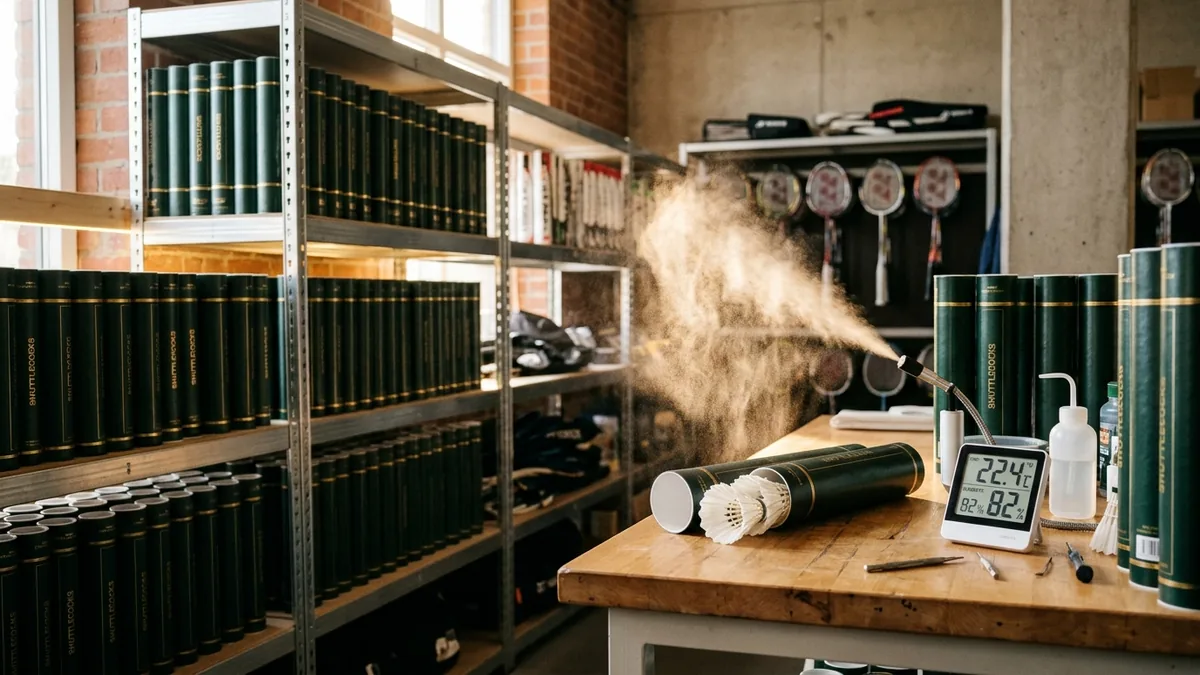
Shuttlecock humidity (RH) & temperature storage reference chart
How ambient relative humidity affects keratin feather elasticity, flight weight and preparation before club sessions.
| Ambient RH range | Feather shaft state | Durability impact on court | Recommended humidification protocol | Weight change |
|---|---|---|---|---|
| < 35% RH (dry heated winter hall) | Brittle, dehydrated rachis | High risk of clean shaft snap in first 4–6 rallies | 20–30 sec ultrasonic mist 24–48h before play; reseal cap | +0.06 to +0.10 g (restores baseline) |
| 35%–50% RH (cool autumn / AC room) | Slightly dry keratin fibers | Vane fraying appears earlier than normal | 10–15 sec light mist or damp cap sponge 24h before play | +0.04 to +0.07 g |
| 55%–65% RH (ideal factory baseline) | Supple, elastic shaft & vane | Optimal rally life and crisp recovery | No humidification needed; open tube at court side | 0.00 g (calibrated 4.9–5.0 g) |
| 65%–75% RH (humid summer / coastal) | Slightly moisture-heavy | Good durability but slightly heavier flight | Keep tubes sealed with foil cap until match start | +0.05 to +0.09 g |
| > 80% RH (tropical rain / over-steamed) | Over-saturated barbs & glue | Skirt flares outward, shuttle flies 1 speed slower | Store in dry cabinet with silica packs; never add steam | +0.15 to +0.25 g (too heavy) |
Why dry air makes natural goose and duck feathers brittle
Waterfowl feathers are composed of cross-linked beta-keratin proteins that rely on 10%–12% internal moisture content to bend up to 25 degrees upon racket impact and spring back within milliseconds.
Keratin moisture loss below 40% RH
Heated winter gymnasiums and air-conditioned storage rooms pull moisture out of the hollow feather shaft (rachis). Once internal moisture drops below 8%, impact energy fractures the shaft wall instead of dispersing along the stem.
Vertical cork-down storage in foil tubes
Always stand tubes vertically with corks facing down (following the directional arrows on the tube). Horizontal stacking or crushing tubes deforms the 65–68 mm skirt diameter and causes wobble.
Shelf life of bulk 50-tube cartons
Kept in closed master cartons at 55%–65% RH and 15–25°C, goose and duck shuttlecocks maintain peak flight stability and glue bond strength for 12–18 months.
Step-by-step 24-hour humidification protocol for clubs and tournaments
Proper humidification rehydrates only the keratin feather tips and shafts while keeping the composite or natural cork base and polyurethane resin collar completely dry.
Step 1: Open both tube caps 24–48 hours ahead
Remove the top and bottom caps of the 12-shuttle tube one to two days before your club session so mist can pass evenly through the feather skirts without condensing droplets on the corks.
Step 2: Apply 15–30 seconds of cool ultrasonic mist
Hold the outflow end (where feathers point outward) 10–15 cm above a cool ultrasonic humidifier or tube steamer for 15–30 seconds, then close both caps so moisture equilibrates across all 12 shuttles.
Step 3: Avoid boiling kettle steam right before play
Steaming with boiling water 10 minutes before a match leaves surface water droplets on the vane, softens the thread-locking adhesive resin, and makes the shuttle fly sluggishly.
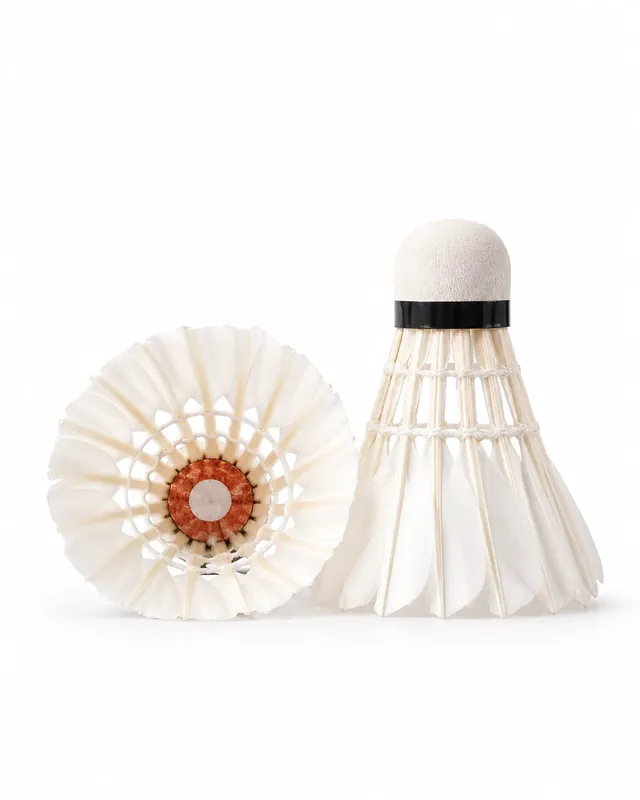
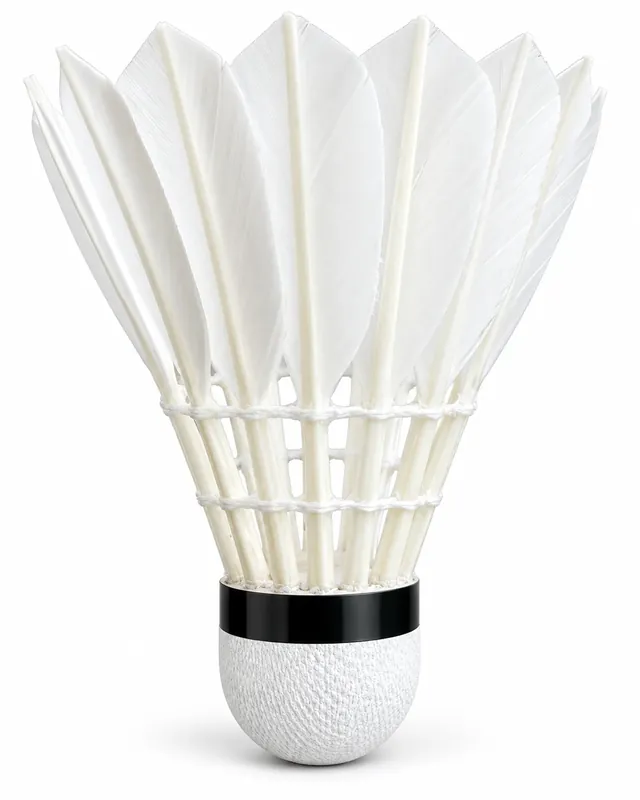
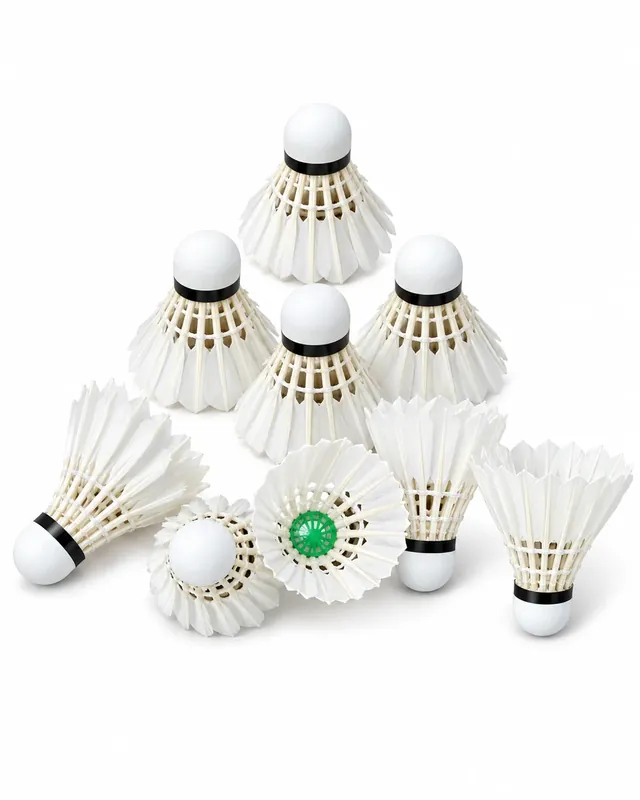
Catalog models featured in this guide
Compare indicative USD EXW reference pricing per tube, save models to your inquiry list, or request 3 free play-test shuttlecocks.
Feather material questions
How long before a match should we humidify feather shuttlecocks?
Humidify 24 to 48 hours before play and reseal the tube caps. This allows moisture to absorb evenly into the keratin shaft wall rather than sitting as wet droplets on the feather surface.
Does humidifying shuttlecocks change their speed number?
Light humidification (15–30 seconds of cool mist 24 hours ahead) restores dehydrated shuttles to their factory-calibrated weight. Over-steaming adds 0.15–0.25 g and makes a speed 77 shuttle fly like speed 78 or 79.
Should we store shuttlecock cartons vertically or flat in our warehouse?
Store master cartons flat following the outer carton arrows so the inner 50 tubes stand upright with corks pointing downward, protecting the feather skirts from compression.
Which catalog models hold up best in dry winter training halls?
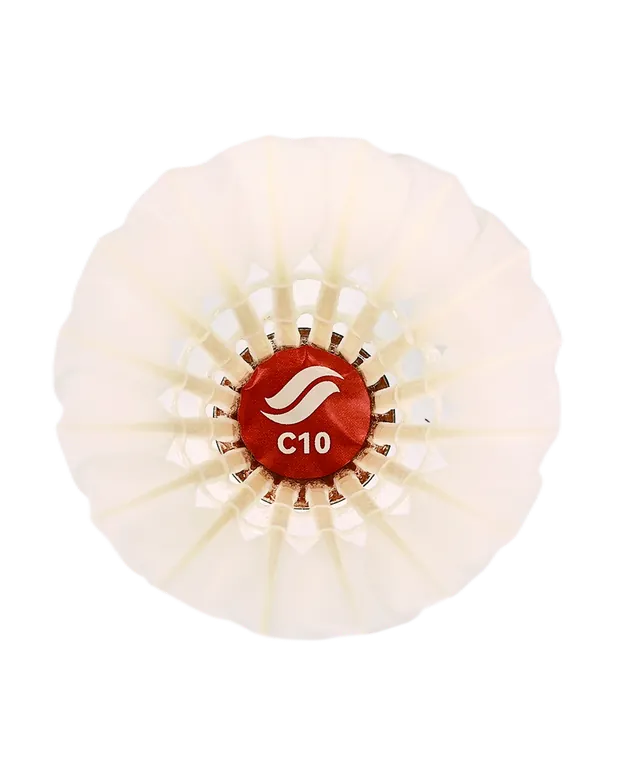
Thick-stemmed goose models (A10, CG-1, G10) and dense Mulard/Cigu duck training models (1103, C10) offer strong shaft wall resilience when paired with 55%–65% RH storage.
Continue reading related factory guides
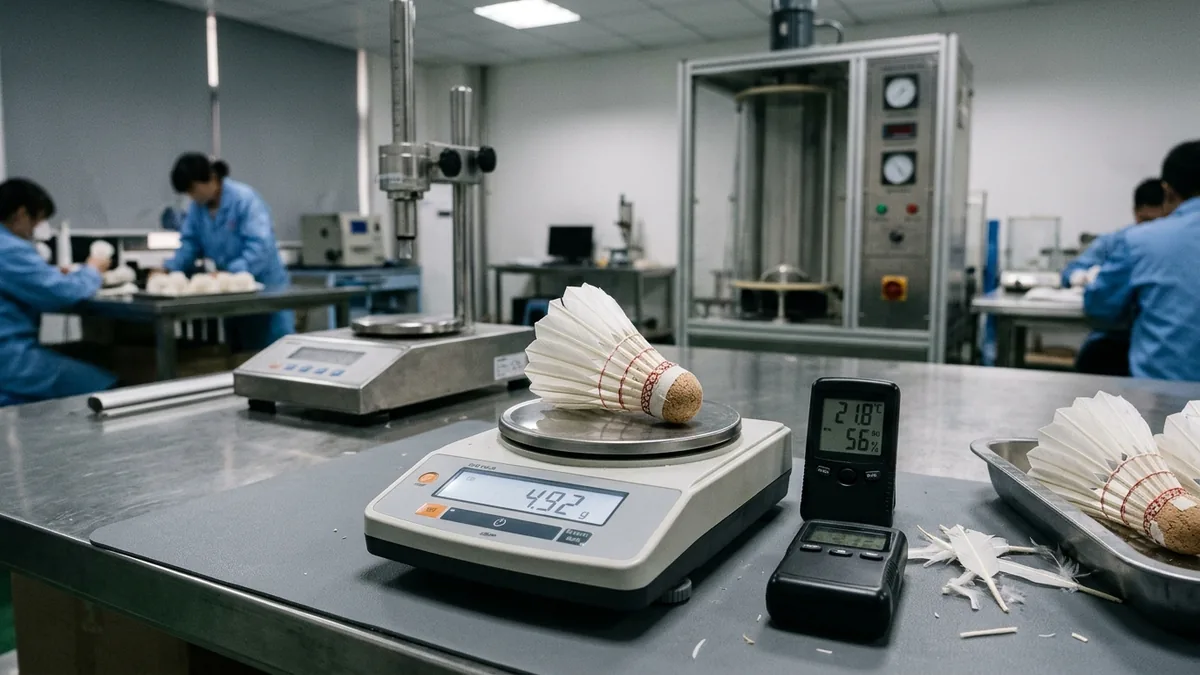
Shuttlecock speed chart (74–79): temperature, altitude and baseline test guide
Use our factory shuttlecock speed chart (74–79) to match court temperature, altitude and air density, plus how to run the BWF baseline landing test.
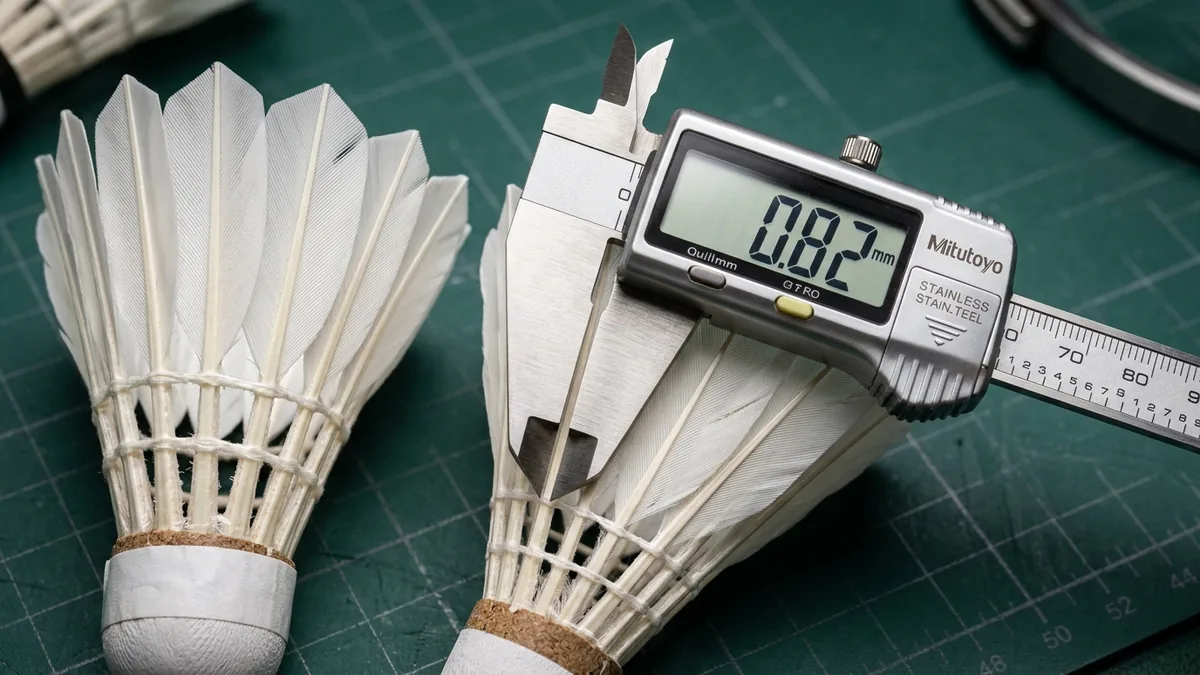
Goose vs duck feather shuttlecocks: anatomy, durability and club cost comparison
Compare goose vs duck feather shuttlecock durability, shaft anatomy, Mulard/Cigu/Teng species differences and cost-per-set across 80 factory models.
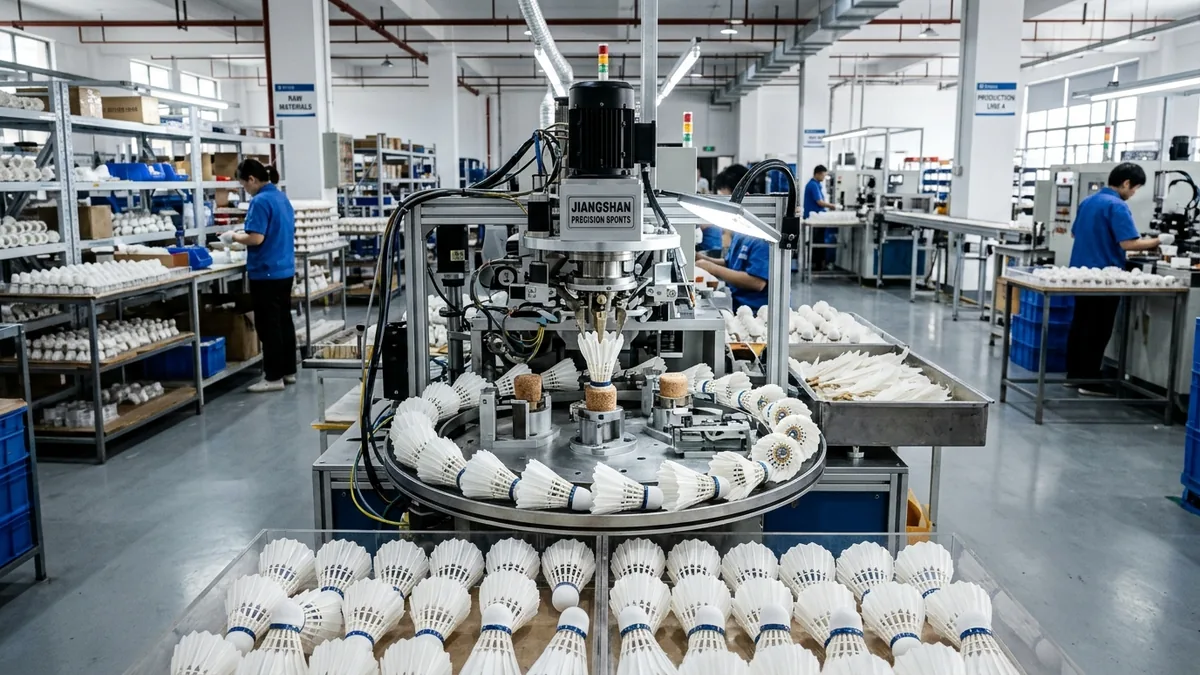
How badminton shuttlecocks are made: 6-stage Jiangshan factory process and QC standards
Inside our Jiangshan shuttlecock factory: see the 6-stage manufacturing process from 16-feather wing sorting and 25.5° cork drilling to flight and speed QC.