
Goose vs duck feather shuttlecocks: anatomy, durability and club cost comparison
Goose feather shuttlecocks deliver higher shaft wall thickness (1.5–1.9 mm at the base), slower vane fraying and 30%–50% longer rally survival under heavy smashes, making them the first choice for tournament and league matches. High-grade duck feather shuttlecocks (Taiwan/Mulard, Cigu and Cherry Valley duck) cost 20%–35% less per tube and provide the lowest cost-per-hour for daily club nights and academy multi-shuttle drills.
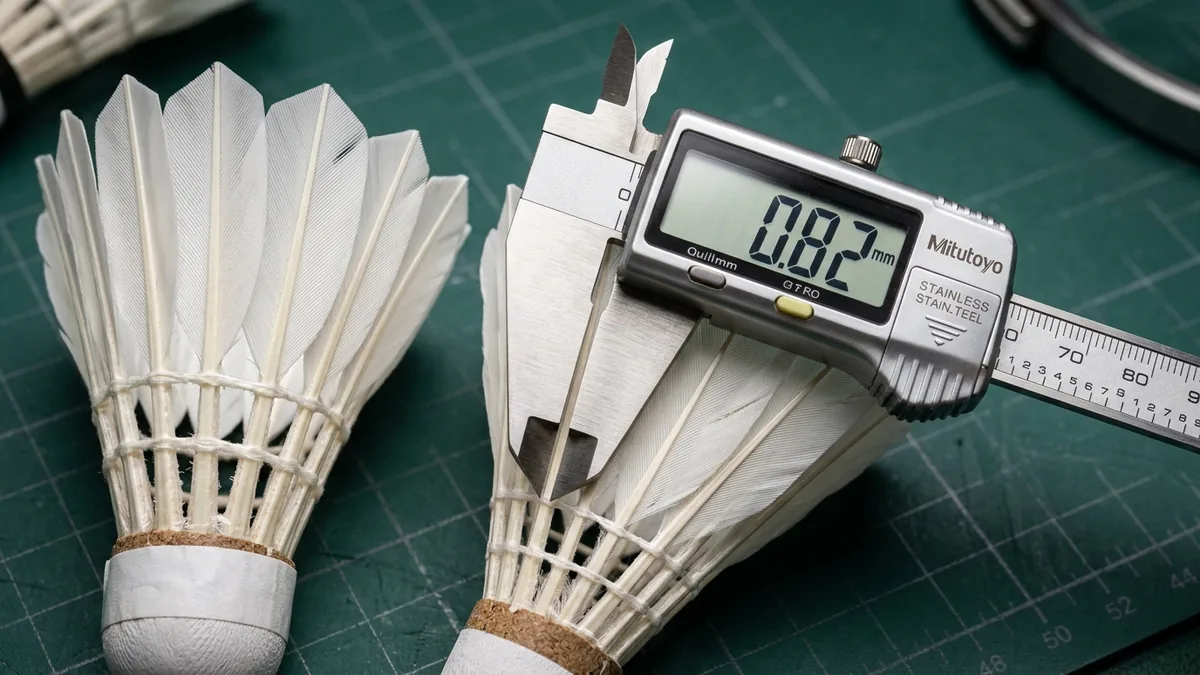
Goose vs duck feather species comparison across factory catalog grades
Side-by-side comparison of feather anatomy, cork pairing, indicative EXW tube price and best court scenario.
| Feather material tier | Shaft thickness & vane arch | Typical failure mode on court | Catalog price range (USD / tube) | Recommended court use & SKUs |
|---|---|---|---|---|
| Northeast / White Goose (Grade A) | Thick straight rachis · uniform symmetric vane | Gradual tip wear after extended hard rallies | $18.30 – $24.71 EXW | Tournament & premier club match · GL-1, CG-1, G10 |
| Selected Club Goose (Da Dao / Mid) | Medium-thick shaft · high flex recovery | Slow vane thinning over 1.5–2 sets of doubles | $11.82 – $18.10 EXW | Regular club nights & varsity match · A10, 701 |
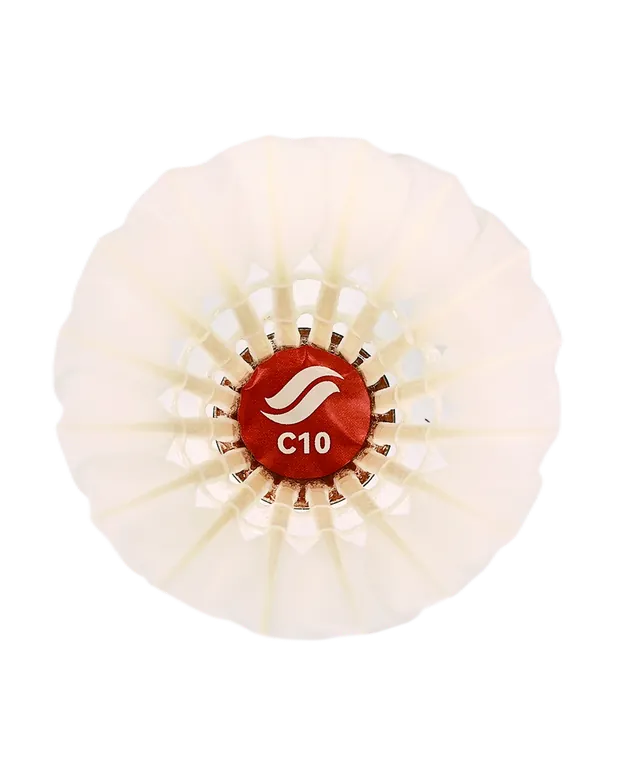
| Taiwan / Mulard Duck (Luo Duck) | Thickest duck shaft · dense barb interlock | Controlled vane fraying; rare shaft break | $13.50 – $20.89 EXW | Competitive club play & elite drills · C10 |
| Cigu / Cherry Valley Duck | Medium shaft · crisp initial flight trajectory | Progressive vane splitting under heavy smashes | $9.50 – $15.60 EXW | Academy training & high-volume clubs · 1103 |
| Teng Duck / Mixed Duck | Slender shaft · moderate oil content | Faster barb separation in hard-hitting doubles | $6.80 – $10.50 EXW | School PE & junior multi-shuttle drills |
| Water Duck (Shui Duck) | Thin rachis · economical blade cut | Early shaft bend on high-tension mishits | $5.68 – $7.50 EXW | Casual family & beginner recreational play |
Structural anatomy: why goose shafts outlast duck shafts on heavy smashes
Waterfowl growth cycles and wing span directly determine the cross-sectional density of the feather shaft (rachis) and the tightness of the microscopic barbules locking the vane together.
Rachis wall density & medullary foam core
Mature geese have a longer growth cycle than ducks, producing a denser outer keratin cortex and a fuller medullary foam core inside the shaft that absorbs string-bed shock at 28–32 lbs tension.
Natural preen-oil retention & barbule hook strength
Goose wing primaries retain higher natural lipid content after washing and drying, keeping the barbules interlocked longer before the feather tips begin to feather out.
Left-wing vs right-wing curvature sorting
Every single shuttlecock in our workshop uses 16 feathers strictly from the same wing side (all left-wing or all right-wing) so axial spin remains between 320 and 380 rpm without wobble.
How to split your club or wholesale order between goose and duck models
Evaluating shuttlecocks solely by tube price often hides the true cost per game played. Matching feather species to player string tension prevents overspending on drills or under-specifying for matches.
High-tension doubles (27–32 lbs) -> Goose Grade A
Advanced men’s and mixed doubles generate high impact velocity; using GL-1, CG-1 or G10 reduces shuttle changes per set and maintains consistent trajectory to the final point.
Club social sessions (22–26 lbs) -> Club Goose or Mulard Duck
Intermediate club rotations achieve the lowest cost per court-hour with A10 (goose) or C10 / 1103 (high-grade duck), balancing crisp feel against budget.
Academy multi-shuttle feeding -> Cigu / Teng Duck
Feeding 100+ shuttles from a basket subjects feathers to repeated floor scrapes and frame hits; mid-tier duck models cut training consumable budgets by 25%–35%.
Catalog models featured in this guide
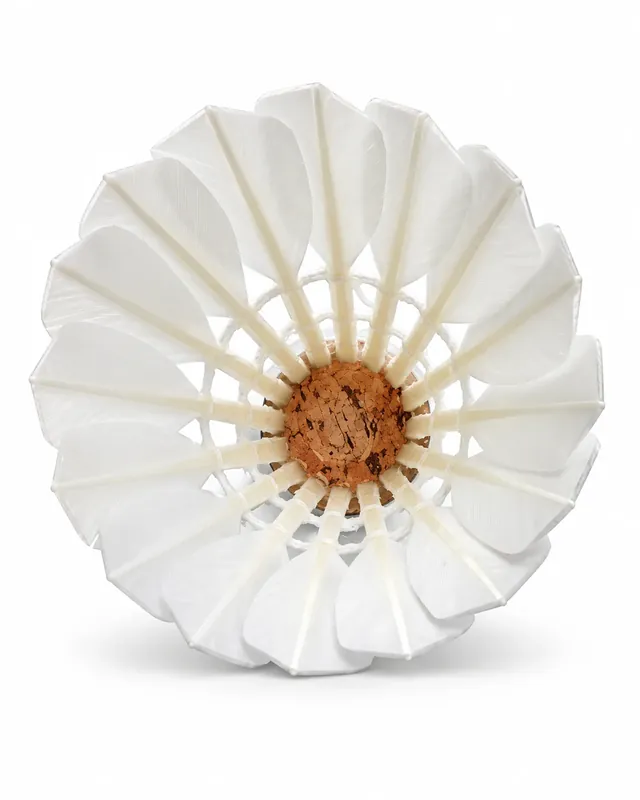
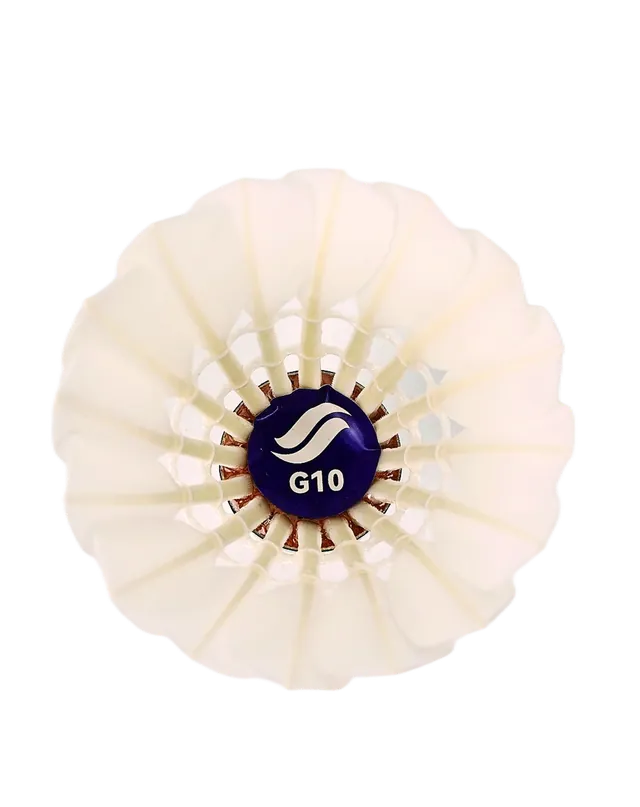
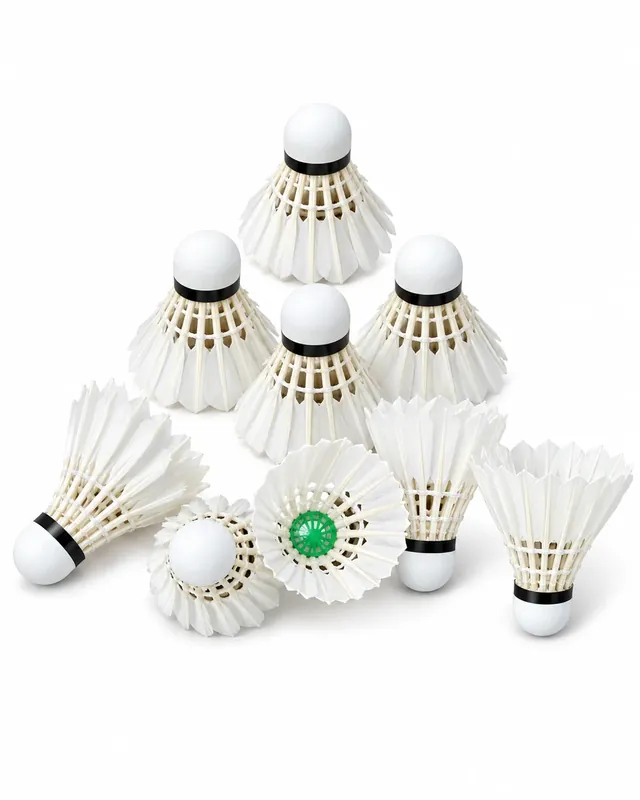
Compare indicative USD EXW reference pricing per tube, save models to your inquiry list, or request 3 free play-test shuttlecocks.
Feather material questions
Do top-grade duck shuttlecocks last longer than entry-level goose shuttlecocks?
Yes, a Grade-A Taiwan/Mulard duck or Cigu duck shuttlecock paired with a 2-layer composite cork (such as C10 or 1103) frequently outlasts a thin-stemmed bleached goose shuttlecock.
How can you visually tell goose feathers apart from duck feathers on a shuttlecock?
Goose feathers have a noticeably thicker, slightly squared shaft base, a wider central groove on the underside of the rachis, and a gentler natural arch along the stem compared to duck feathers.
Why do some duck shuttlecocks feel slightly faster off the strings than goose?
Duck feathers have a slightly stiffer initial curve and lower vane air drag during the first 0.2 seconds of flight, while goose feathers parachute and decelerate more progressively at the back boundary line.
Can we test both goose and duck models in one sample shipment?
Yes. Use our 3-free-sample program (buyer pays courier shipping) or order a mixed trial carton combining goose (GL-1, G10, A10) and duck (1103, C10) tubes.
Continue reading related factory guides
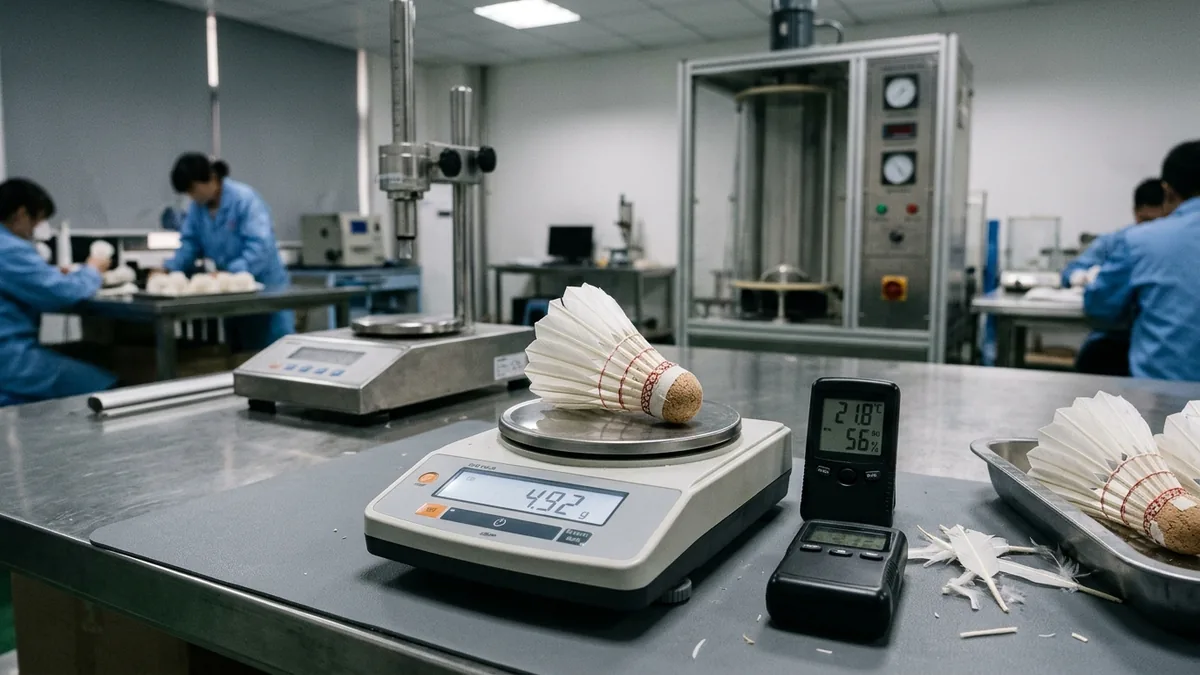
Shuttlecock speed chart (74–79): temperature, altitude and baseline test guide
Use our factory shuttlecock speed chart (74–79) to match court temperature, altitude and air density, plus how to run the BWF baseline landing test.
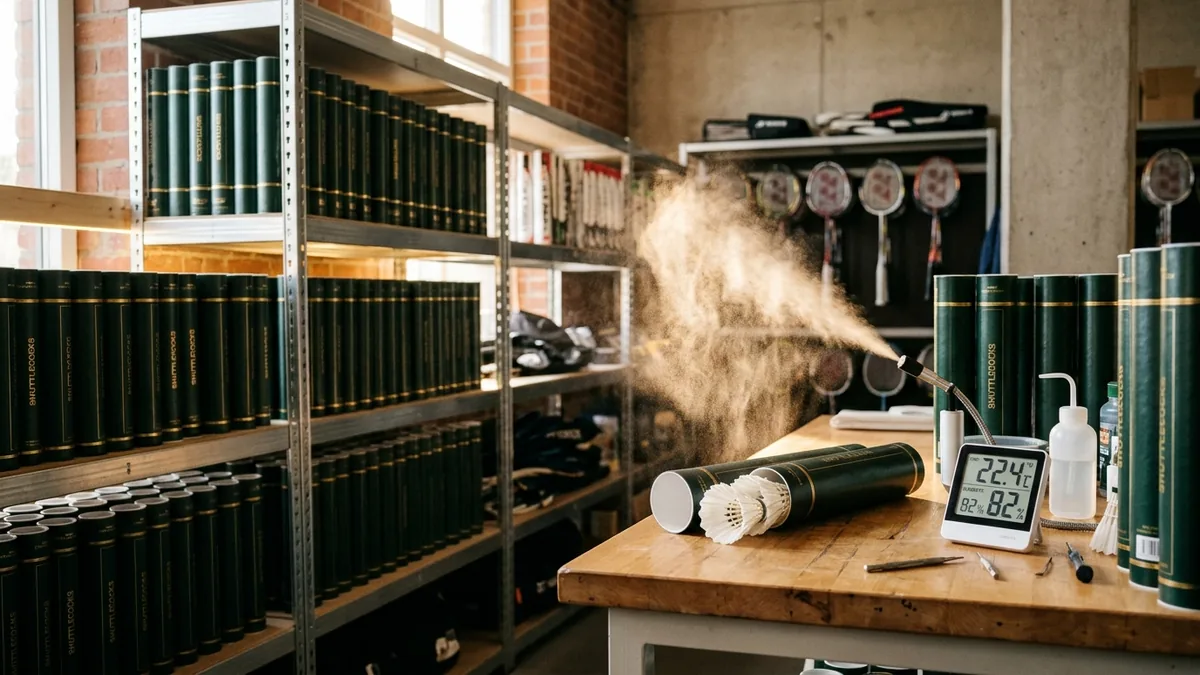
How to store and humidify feather shuttlecocks: 55%–65% RH club & warehouse guide
Learn how to store and humidify goose and duck feather shuttlecocks at 55%–65% RH and 15–25°C to prevent brittle shafts and extend rally durability.
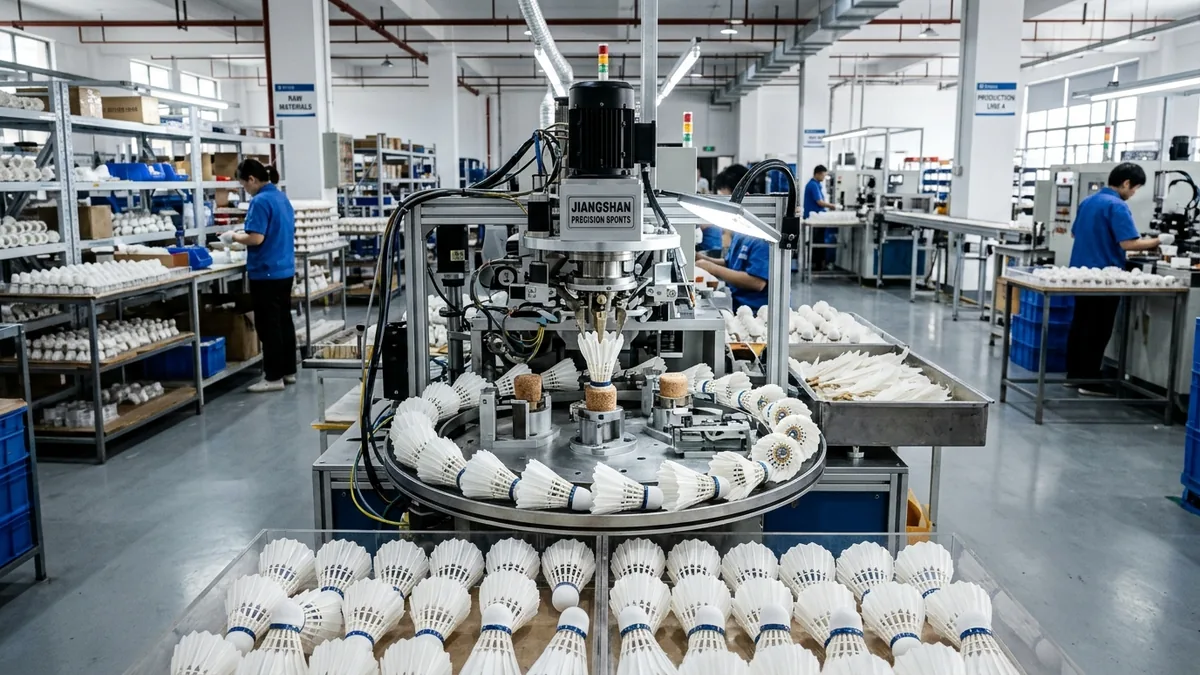
How badminton shuttlecocks are made: 6-stage Jiangshan factory process and QC standards
Inside our Jiangshan shuttlecock factory: see the 6-stage manufacturing process from 16-feather wing sorting and 25.5° cork drilling to flight and speed QC.