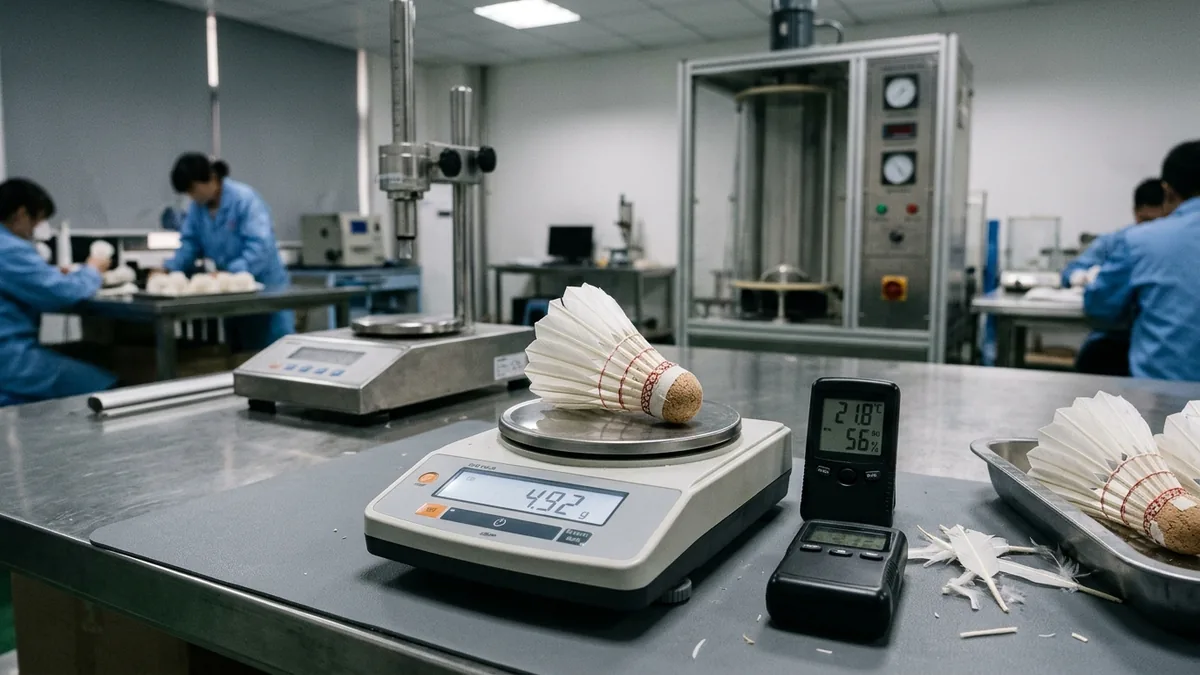
Shuttlecock speed chart (74–79): temperature, altitude and baseline test guide
Use our factory shuttlecock speed chart (74–79) to match court temperature, altitude and air density, plus how to run the BWF baseline landing test.
Explore technical articles and buyer guides written by the export team at our Jiangshan badminton shuttlecock factory. Compare speed numbers (74–79), storage humidity (55%–65% RH), goose and duck feather anatomy, workshop assembly stages, nylon vs feather costs and private-label OEM steps.
Answer-first technical guides with quantitative parameters, comparison tables and court-testing protocols for club managers, coaches and wholesale importers.
Use our factory shuttlecock speed chart (74–79) to match court temperature, altitude and air density, plus how to run the BWF baseline landing test.
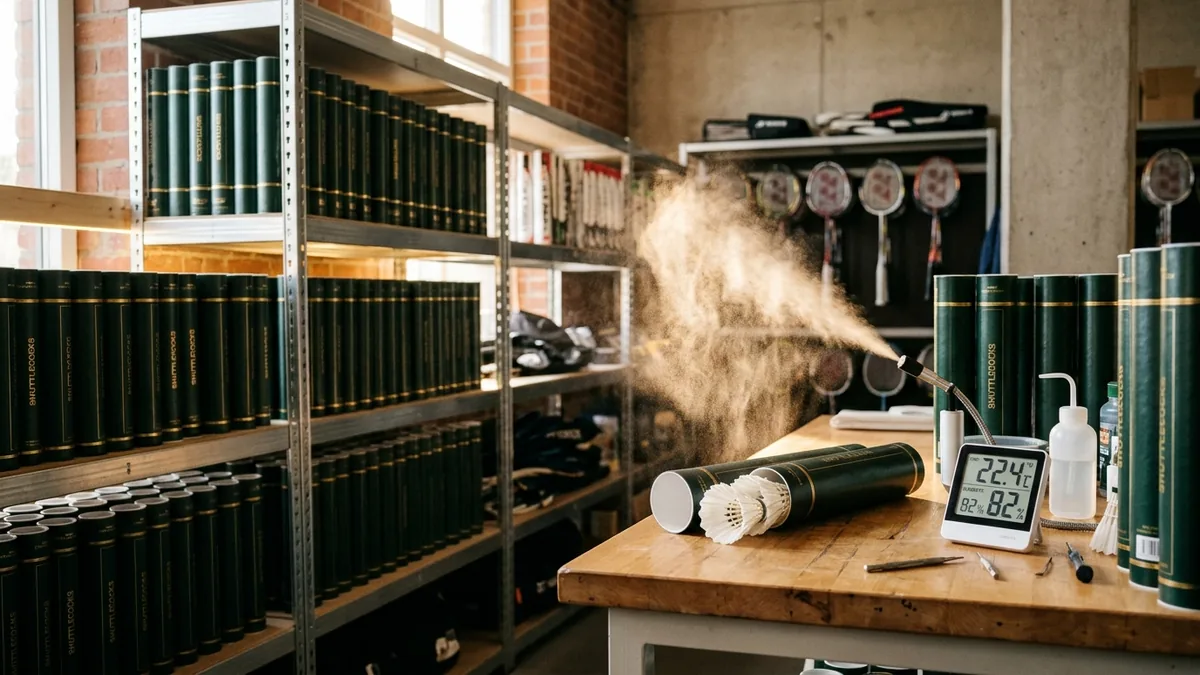
Learn how to store and humidify goose and duck feather shuttlecocks at 55%–65% RH and 15–25°C to prevent brittle shafts and extend rally durability.
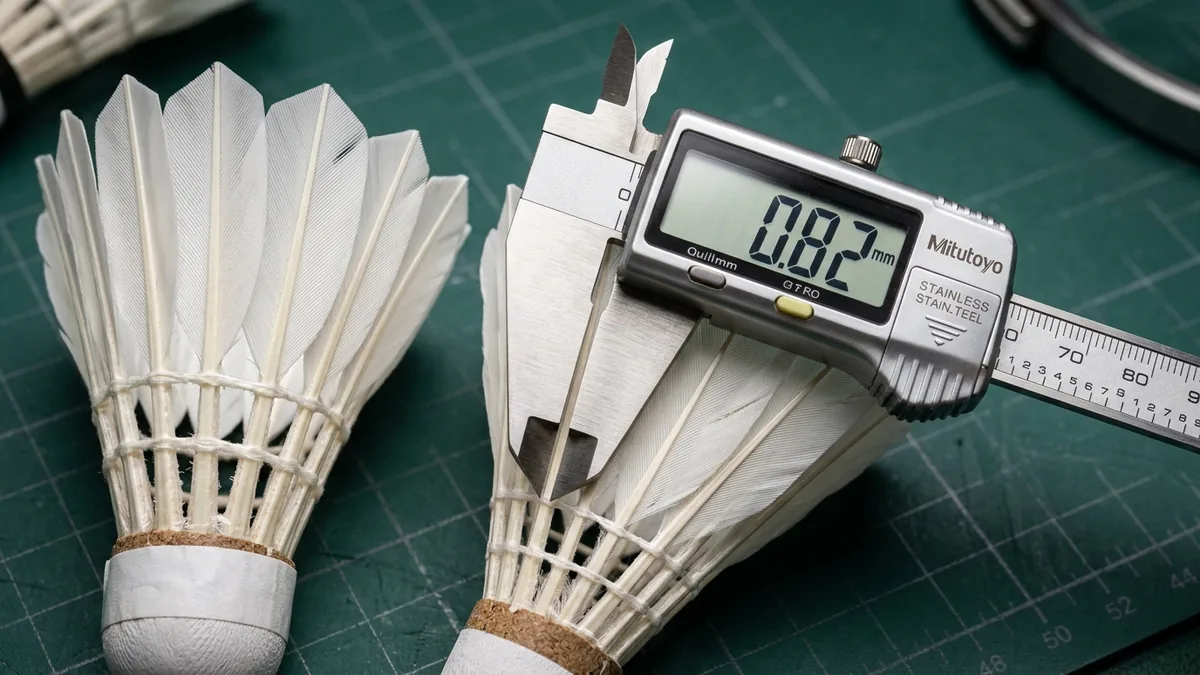
Compare goose vs duck feather shuttlecock durability, shaft anatomy, Mulard/Cigu/Teng species differences and cost-per-set across 80 factory models.
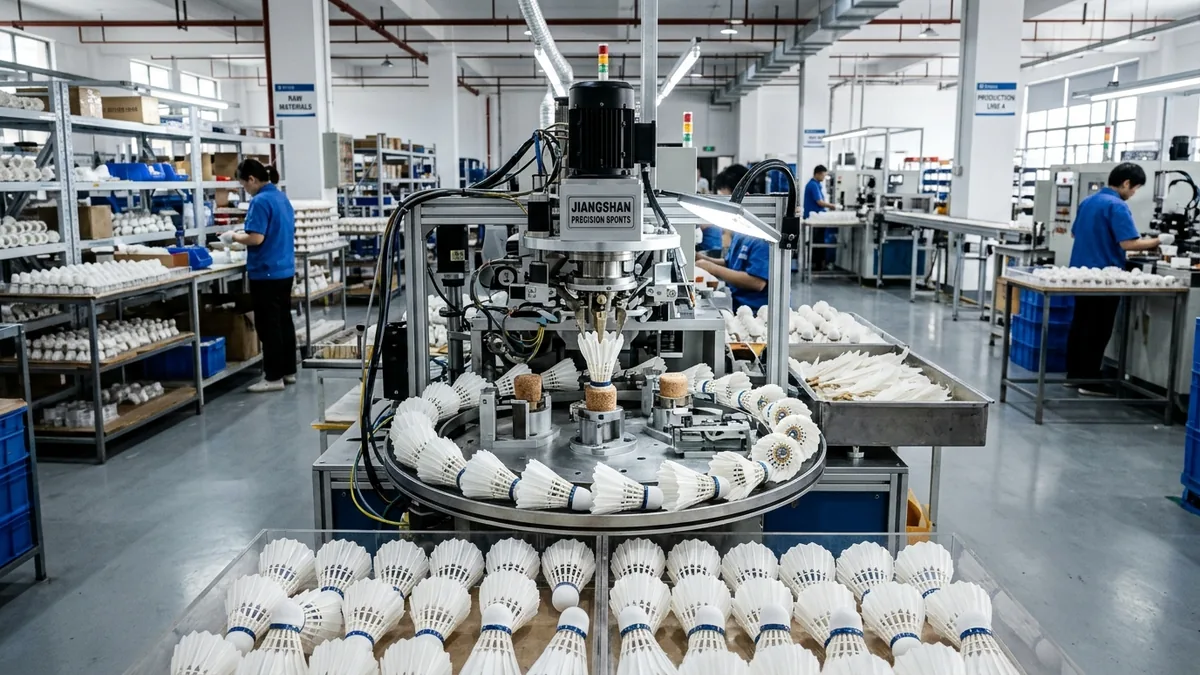
Inside our Jiangshan shuttlecock factory: see the 6-stage manufacturing process from 16-feather wing sorting and 25.5° cork drilling to flight and speed QC.
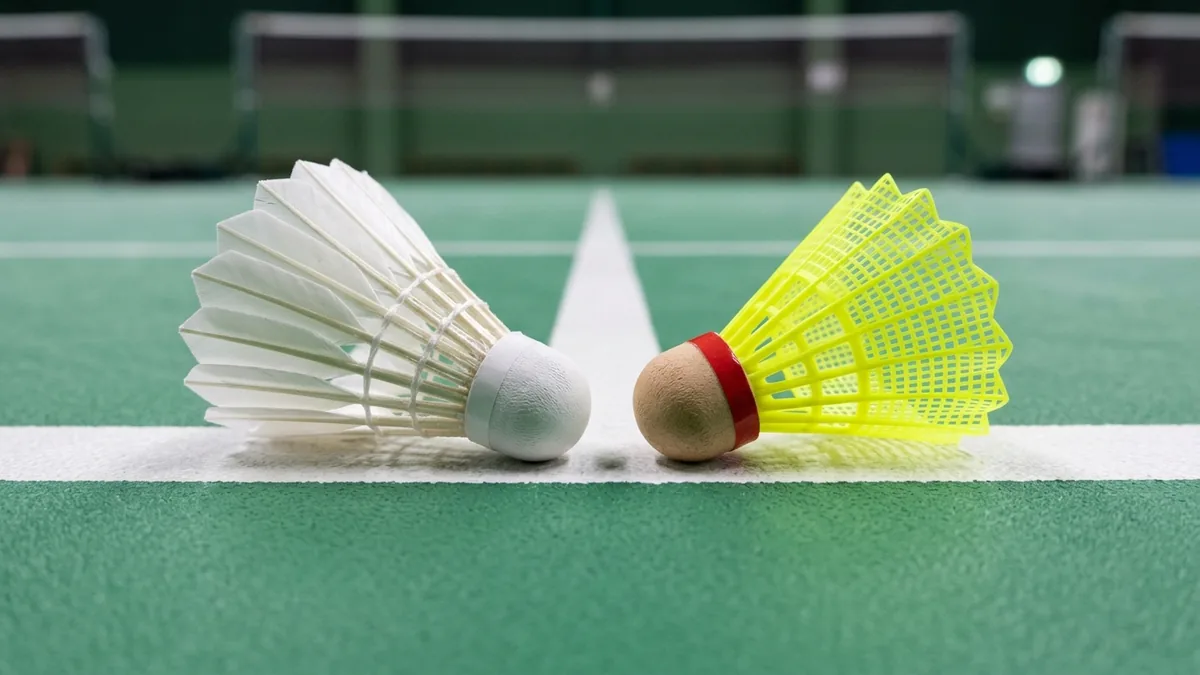
Compare natural feather vs synthetic nylon shuttlecocks on deceleration physics, net spin, string tension limits (20–30 lbs) and hourly court cost.
Step-by-step OEM guide to launching your own badminton shuttlecock brand: 3 free samples, feather/cork pairing, custom tube printing and carton CBM.
Jump directly to the technical guide and factory SKUs that match your procurement or court-management task.
| Buyer role / court scenario | Primary technical question | Recommended guide | Representative SKUs |
|---|---|---|---|
| Club manager / tournament director | Which speed (76, 77 or 78) fits our hall temperature and altitude? | Speed 74–79 Temperature & Altitude Chart | GL-1, A10, G10 |
| Winter hall / dry climate academy | How do we stop feather shafts from drying out and snapping? | 55%–65% RH Storage & Humidification Guide | A10, 1103, C10 |
| Wholesale buyer / academy coach | Should we order goose or Mulard/Cigu/Teng duck for daily training? | Goose vs Duck Feather Durability & Cost Guide | G10, 1103, C10 |
| Importer / quality inspector | How are 16 feathers sorted, drilled, laced and flight-tested? | 6-Stage Shuttlecock Factory Production Guide | GL-1, CG-1, A10 |
| School PE / multi-shuttle drill program | When do nylon shuttlecocks beat feather models on hourly cost? | Feather vs Nylon Flight & Court-Hour Cost Guide | 110, 110A, 800-12 |
| Private-label brand founder | How do we launch custom tubes from 1-tube catalog trials? | Private-Label Shuttlecock Brand & OEM Guide | GL-1, G10, C10 |
Real-time specification tables aggregated directly from all 80 goose, duck and nylon models in our Jiangshan factory catalog.
Compare goose, duck and nylon shuttlecock materials from our Jiangshan manufacturer. Review feather grades, head pairings, tube packing and EXW price ranges.
Compare pure cork, 3-layer cork, fiber composite cork, wood-cork and foam shuttlecock heads across 80 models from our Jiangshan factory and manufacturer.
Review listed shuttlecock speeds (74 to 79), tube packing, carton dimensions, CBM volume and container loading estimates from our Jiangshan manufacturer.