
Feather vs nylon shuttlecocks: flight physics, string tension and court-hour cost guide
Natural feather shuttlecocks use a rigid 16-feather conical skirt that decelerates steeply at the baseline and gives crisp net-tumbling feedback at 24–32 lbs string tension, making them essential for competitive play. Synthetic nylon shuttlecocks use an injection-molded skirt that resists cracking for dozens of games at 18–23 lbs string tension, cutting consumable budgets by 60%–75% for school PE classes, beginner drills and outdoor recreation.
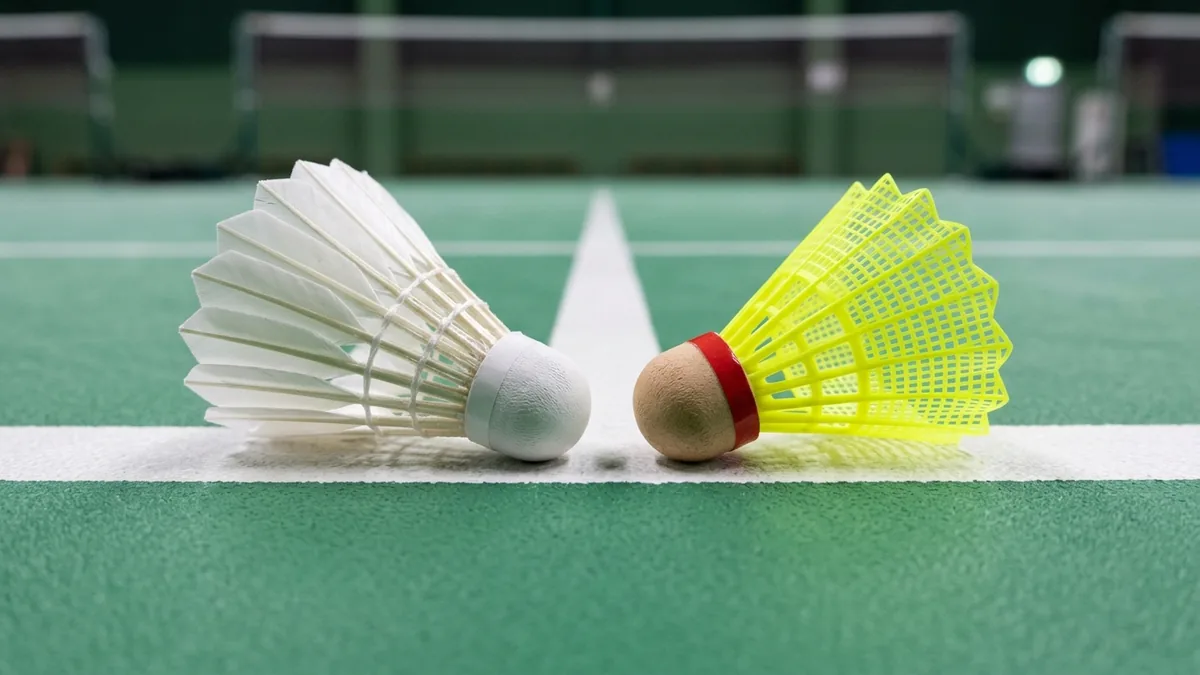
Natural feather vs synthetic nylon shuttlecock technical & cost comparison
Side-by-side comparison of aerodynamic deceleration, racket string compatibility and hourly court economics.
| Comparison dimension | Natural goose feather (GL-1 / G10) | Natural duck feather (1103 / C10) | Synthetic nylon skirt (110 / 800-12) | Practical takeaway for buyers |
|---|---|---|---|---|
| Skirt deceleration curve | Sharp parachute drop inside baseline | Crisp deceleration with slightly brisk initial speed | Skirt compresses on smash; flatter parabolic arc | Feather is mandatory for tournament timing |
| Net-shot tumbling & slice | High axial spin (320–380 rpm) & tight hairpin tumble | Reliable spin & clean net feedback | Lower friction against strings; wider bounce off cork | Use feather to train advanced net control |
| Recommended string tension | 24 – 32 lbs (thin & medium gauges) | 22 – 28 lbs (all standard gauges) | 18 – 23 lbs (0.68–0.70 mm durable strings) | Avoid hitting cold nylon above 26 lbs |
| Catalog price range (EXW) | $11.82 – $24.71 / 12-shuttle tube | $5.68 – $20.89 / 12-shuttle tube | $1.31 – $8.32 / tube (3, 6 or 12 pcs) | Nylon lowers entry barrier for schools & retail |
| Typical lifespan on court | 1 – 2 high-level sets per shuttle | 0.8 – 1.5 club sets per shuttle | 10 – 25 games per shuttle before skirt tear | Nylon reduces per-hour PE consumable cost |
Aerodynamic physics: skirt compression vs natural keratin stiffness
Even when a feather shuttlecock and a nylon shuttlecock weigh the exact same 5.0 grams on a scale, their terminal deceleration trajectories differ noticeably during fast rallies.
High-speed skirt compression on smashes
At smash speeds above 300 km/h, a flexible thermoplastic nylon skirt folds slightly inward for the first 2 meters, reducing air drag so the shuttle stays fast deeper into the court before dropping.
Natural keratin rigidity & parachute braking
Natural goose and duck rachis stems stay stiff under wind load, keeping the 65–68 mm cone open immediately off the strings so a full clear brakes steeply right at the baseline.
Net tumble & cross-court slice bite
The overlapping natural feather vanes grip the string bed during sliced drop shots and spinning net shots, whereas molded nylon skirts slide off the strings with less spin transfer.
When to buy nylon vs feather shuttlecocks for your facility or retail store
Matching the shuttlecock material to player skill level and venue conditions maximizes both player satisfaction and equipment ROI.
Schools, PE departments & public leisure centers
Where players use steel or low-tension aluminum/graphite rackets (18–22 lbs) and frequently hit the frame, nylon models 110, 110A and 800-12 eliminate constant feather replacement.
Outdoor parks, beaches & night recreation
Windy courtyards and evening leisure games benefit from wind-stable nylon and LED-equipped models (333-LED, FD18-LED) that shrug off damp grass and pavement.
Badminton academies & competitive clubs
Once junior or adult players learn proper pronation, slice and baseline distance control above 23 lbs tension, transitioning to duck (1103) and goose (A10, G10) is essential for timing accuracy.
Catalog models featured in this guide
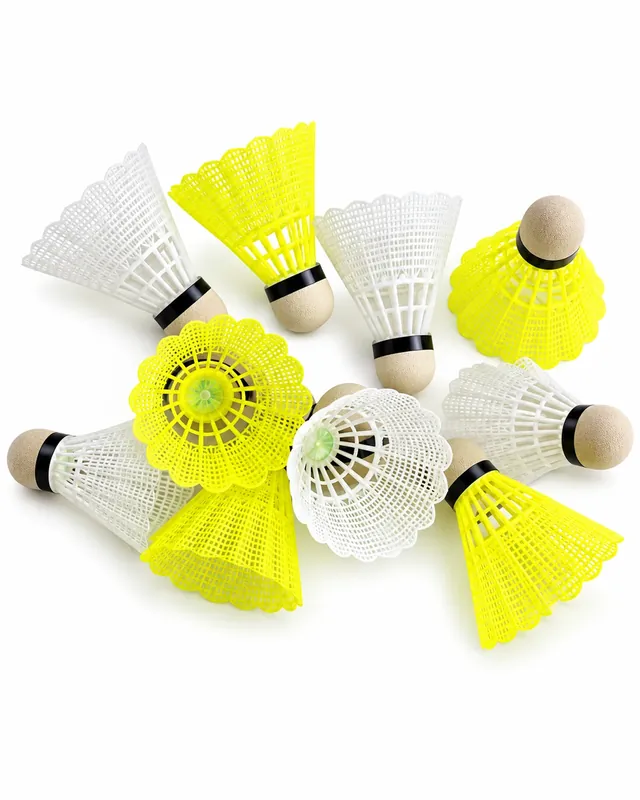
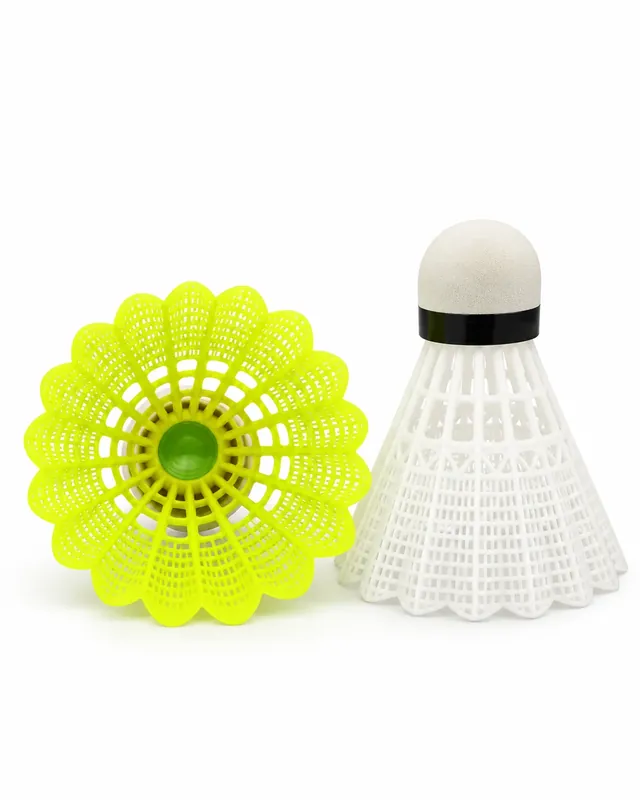
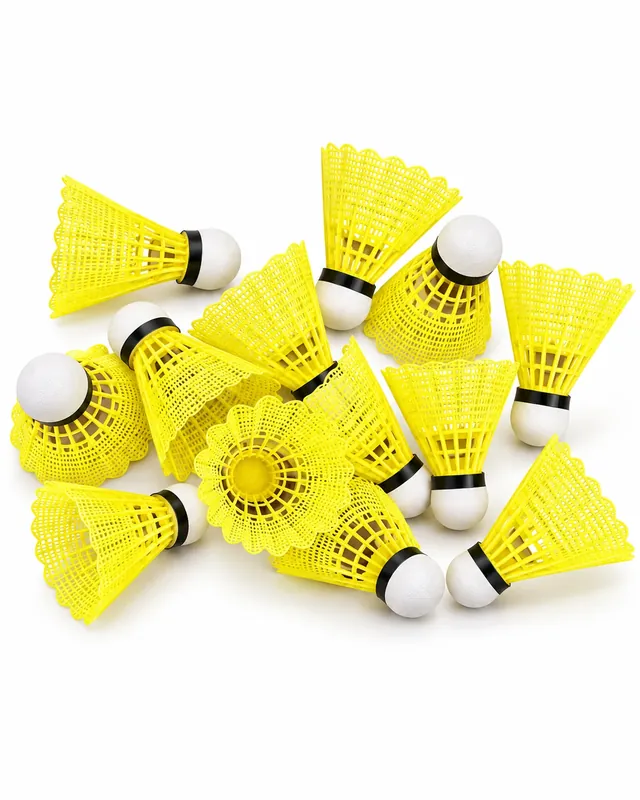
Compare indicative USD EXW reference pricing per tube, save models to your inquiry list, or request 3 free play-test shuttlecocks.
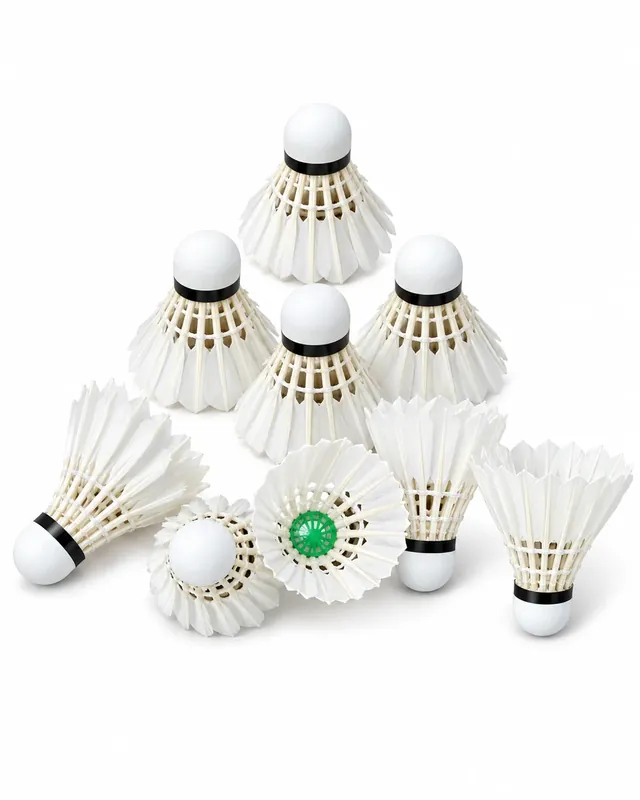
Feather material questions
Why do feather shuttlecocks feel crisper on impact than nylon shuttlecocks?
Natural feather shafts coupled with a multi-layer natural or composite cork transmit a sharp, high-frequency acoustic impulse to the strings, whereas plastic skirts flex and dampen impact feedback.
Can hitting nylon shuttlecocks break high-tension badminton strings?
Yes. If your racket is strung above 26–28 lbs with a thin 0.65 mm string, off-center hits against a dense nylon shuttlecock in a cold hall can snap strings prematurely.
How many nylon shuttlecock models does your Jiangshan factory supply?
Our catalog includes 13 nylon and specialty recreational models (including 3-pack, 6-pack, 12-pack and LED night models) alongside 67 natural goose and duck feather models.
Can we combine nylon tubes and feather tubes in a single wholesale shipment?
Yes. Wholesalers, sporting goods retailers and school suppliers regularly combine nylon tubes (110, 800-12) with duck and goose feather cartons in one consolidated shipment.
Continue reading related factory guides
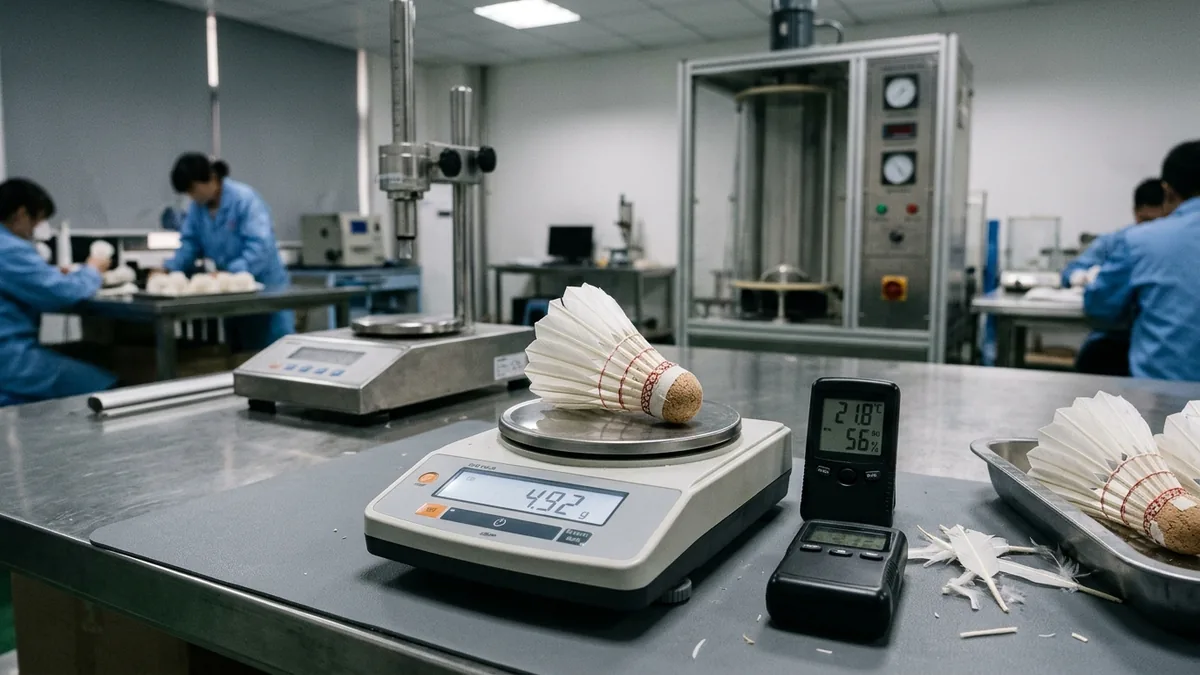
Shuttlecock speed chart (74–79): temperature, altitude and baseline test guide
Use our factory shuttlecock speed chart (74–79) to match court temperature, altitude and air density, plus how to run the BWF baseline landing test.

How to store and humidify feather shuttlecocks: 55%–65% RH club & warehouse guide
Learn how to store and humidify goose and duck feather shuttlecocks at 55%–65% RH and 15–25°C to prevent brittle shafts and extend rally durability.
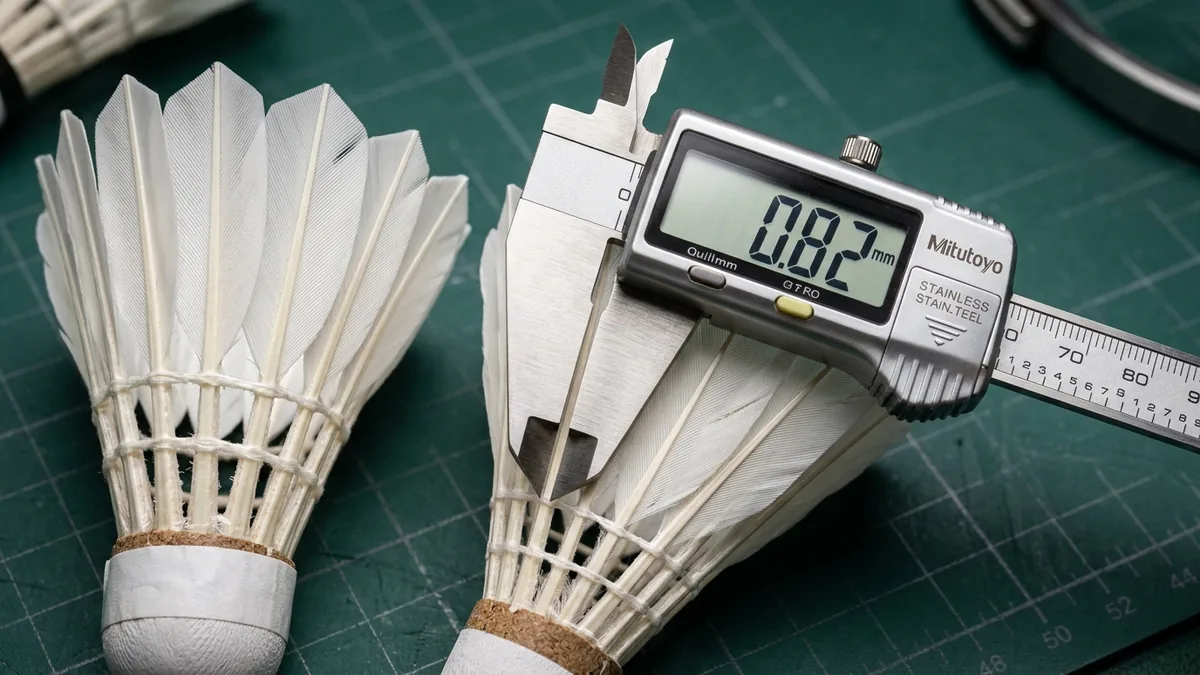
Goose vs duck feather shuttlecocks: anatomy, durability and club cost comparison
Compare goose vs duck feather shuttlecock durability, shaft anatomy, Mulard/Cigu/Teng species differences and cost-per-set across 80 factory models.