
Natural cork vs 3-layer and composite cork shuttlecock heads: buyer engineering guide
The shuttlecock cork base accounts for roughly 60% of total flight mass (around 3.0 g out of 4.9–5.1 g) and determines hitting sound, string rebound and base durability. Pure natural solid cork delivers tournament-grade feel, 3-layer fiber sandwich cork balances crisp rebound with cost stability, and 2-layer composite or wood-cork bases lower tube prices for club practice.
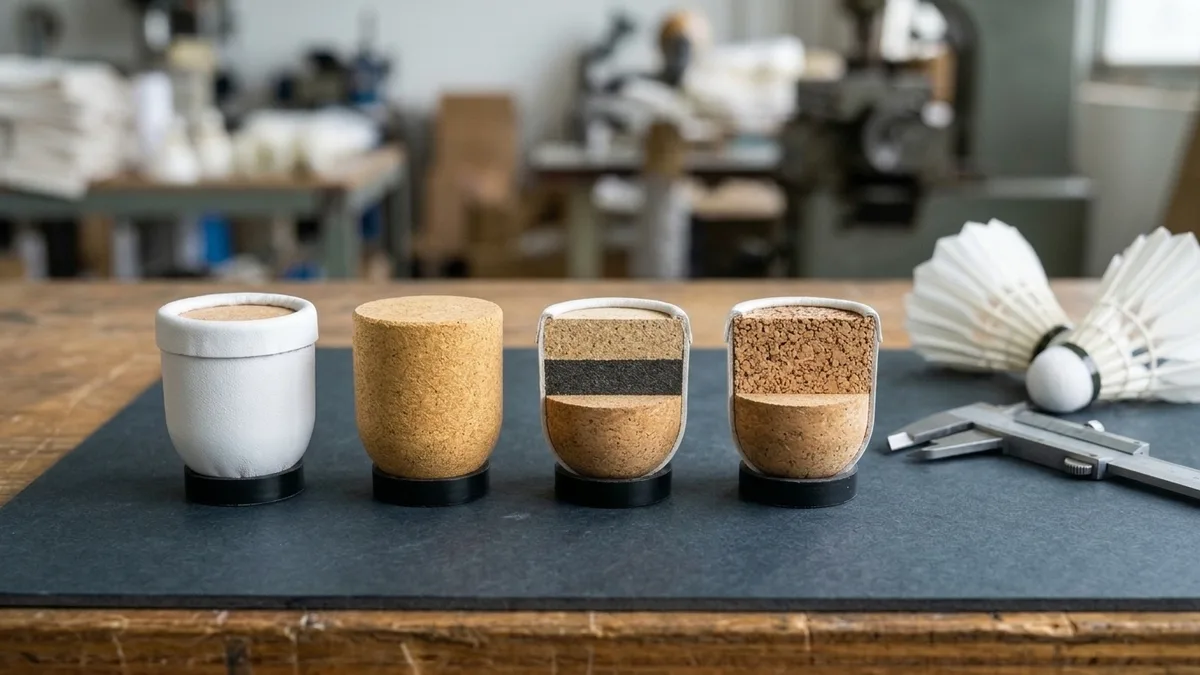
Shuttlecock cork head construction comparison matrix
How base layers affect acoustic snap, impact retention, feather anchoring strength and wholesale price tier.
| Head construction | Internal layer structure | Hitting sound & rebound | Deformation resistance | Catalog examples |
|---|---|---|---|---|
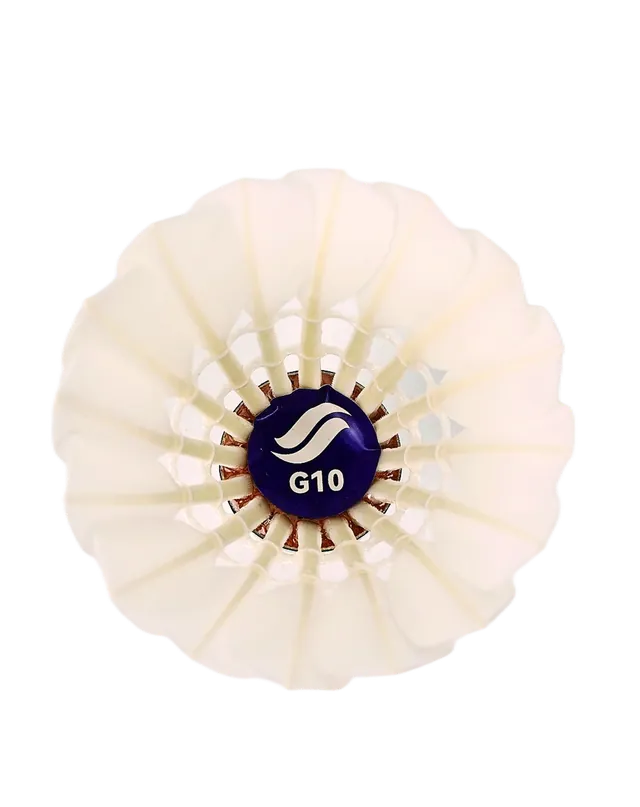
| Pure natural solid cork | Single solid oak-bark cork block | Crisp pop; elastic pro rebound | Excellent shape memory under hard smashes | G10 (Super A Goose) |
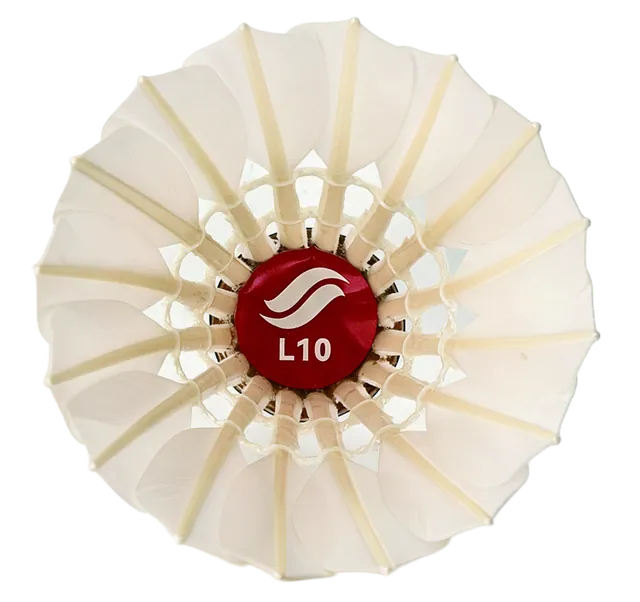
| 3-layer cork / fiber-pure cork | Natural cork tip + fiber core + cork top | Balanced crisp feel & firm launch | High; resists hole widening around quills | GL-1, L10, C10 |
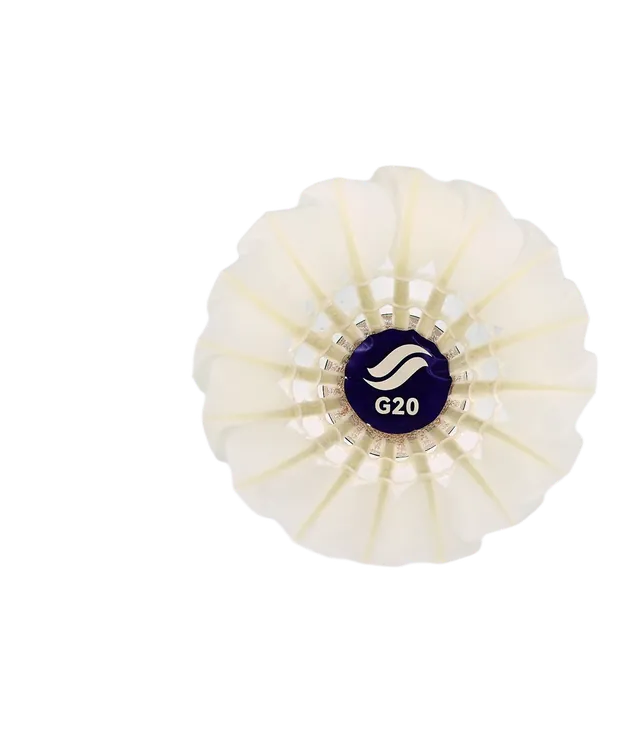
| 2-layer fiber composite cork | Composite cork base + fiber anchor disc | Solid club feel; slightly firmer | Good for daily multi-game sessions | G20, C20, S10 |
| Chip wood & cork base | Granulated cork-wood blend core | Heavier thud; predictable launch | Durable budget core for training drills | 1103, CG-1, Flying No.1 |
| Polymer / hard / soft foam | Molded synthetic foam base | Muted impact; forgiving bounce | High impact survival for beginners | 110, 110A, A10 |
Why cork layer architecture changes hitting feel and shuttlecock lifespan
Every smash compresses the 25–28 mm base against tight racket strings for less than two milliseconds. How the cork recovers determines both player feedback and whether feathers loosen.
Pure solid natural cork vs granulated composite
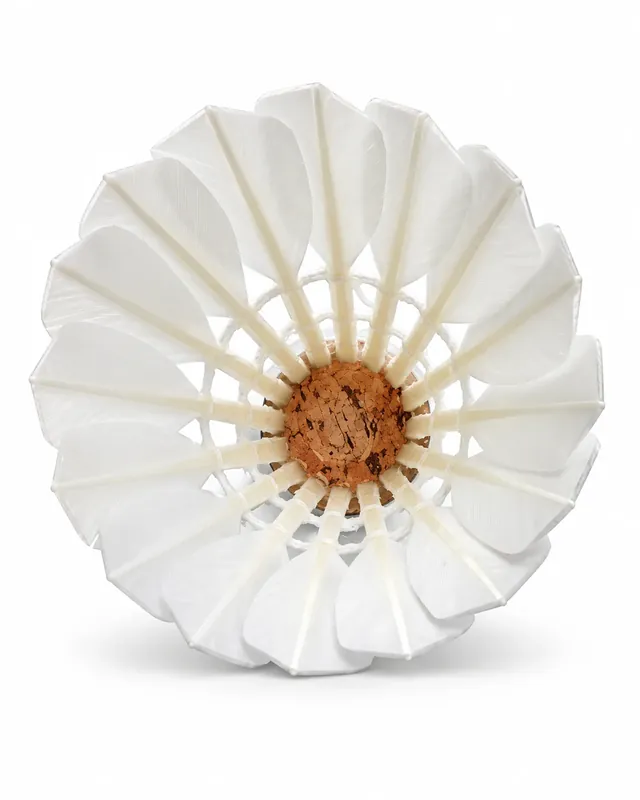
Solid natural oak-bark cork contains millions of closed air cells that compress elastically and spring back cleanly. Granulated composite cork bonds ground cork particles with resin, making the head slightly denser and firmer at impact.
The role of the middle fiber layer in 3-layer heads
A thin high-density fiberboard disc bonded between upper and lower cork sections gives the 16 drilled feather holes a uniform grip ring, reducing quill pull-out during off-center mishits.
PU leather skin wrapping and collar sealing
Even high-grade cork fails early if wrapped loosely. Tight PU leather wrapping and clean collar taping seal moisture out of the base during court humidification.
How buyers should pair cork head types with feather grades
Over-specifying a pure cork base on thin budget feathers wastes budget, while pairing weak foam or low-density bases with Super A goose feathers ruins flight feel.
Tournament & league tiers
Match Super A or Level 1 goose feathers with pure solid cork (G10) or 3-layer cork / 3-layer fiber pure cork (GL-1, L10) so the base outlasts the feathers over full sets.
Daily club & academy training tiers
Pair Mulard, Muscovy or Cigu duck feathers with 3-layer fiber cork (C10), 2-layer composite cork (G20, S10) or chip wood-cork (1103, CG-1) for predictable per-hour costs.
Recreational & nylon school models
Choose natural cork heads on premium nylon models (H-1) when players want feather-like launch feel, or polymer foam (110, 110A) for outdoor and junior durability.
Catalog models featured in this guide
Compare indicative USD EXW reference pricing per tube, save models to your inquiry list, or request 3 free play-test shuttlecocks.
Shuttlecock cork & head construction FAQ
What is the difference between pure cork and 3-layer cork shuttlecocks?
Pure cork uses one solid piece of natural cork for the cleanest tournament rebound, while 3-layer cork bonds a natural cork hitting dome to a fiber anchor disc and upper cork ring for strong feather grip at lower cost.
Do composite cork heads break or soften faster?
Quality 2-layer and 3-layer composite cork heads hold shape well across normal club games, though very soft uncalibrated bases can flatten under repeated hard smashes faster than solid natural cork.
Why do some nylon shuttlecocks use natural cork instead of foam?
A natural cork base on a nylon skirt (such as model H-1) produces a crisper impact sound and truer initial launch speed than lightweight polymer foam.
Can I check cork construction before placing a wholesale order?
Yes. Every product page lists the exact base construction, and you can request 3 free shuttlecocks (buyer pays courier costs) to cut open or play-test on court.
Continue reading related factory guides
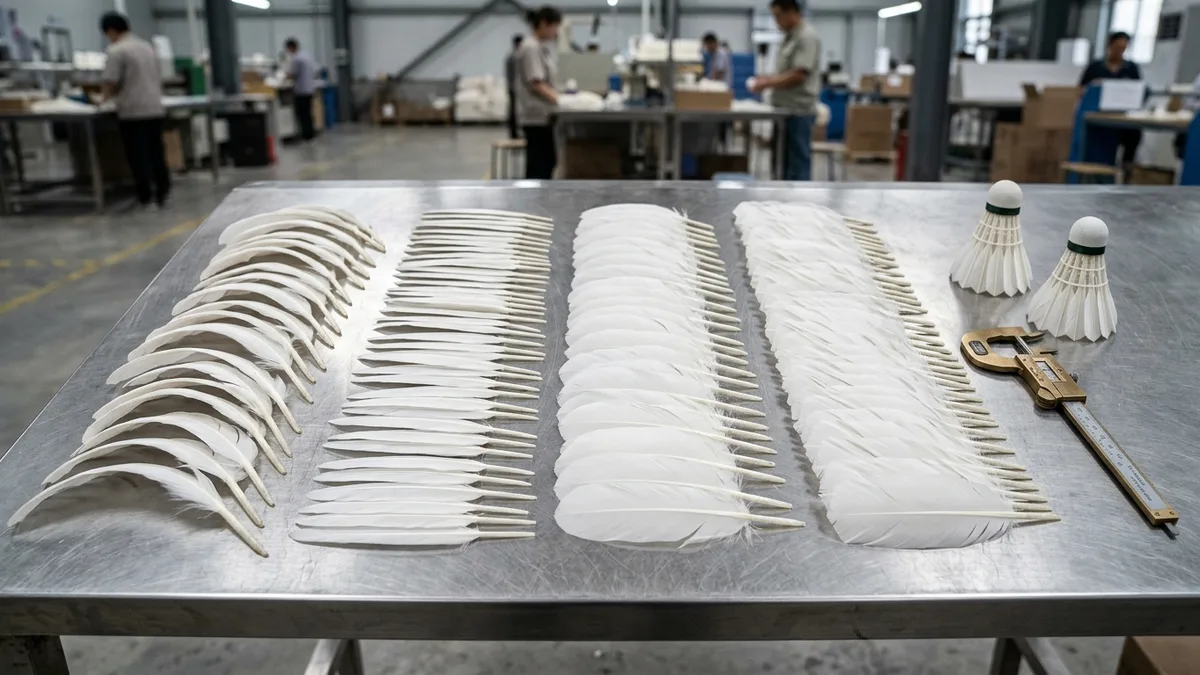
Humpback vs single-side vs full-round feathers: complete shuttlecock vane grading guide
Compare humpback goose, straight knife, full-round Cigu duck and single-sided shuttlecock feathers on flight spin, shaft thickness, durability and B2B cost.
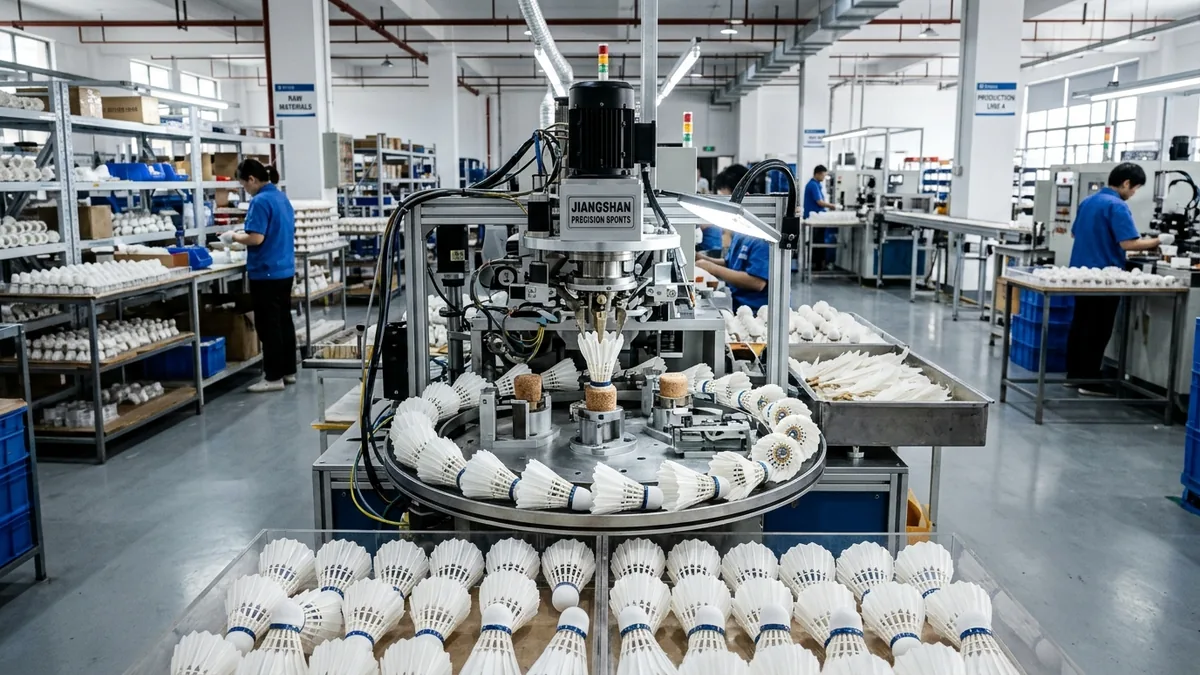
How badminton shuttlecocks are made: 6-stage Jiangshan factory process and QC standards
Inside our Jiangshan shuttlecock factory: see the 6-stage manufacturing process from 16-feather wing sorting and 25.5° cork drilling to flight and speed QC.
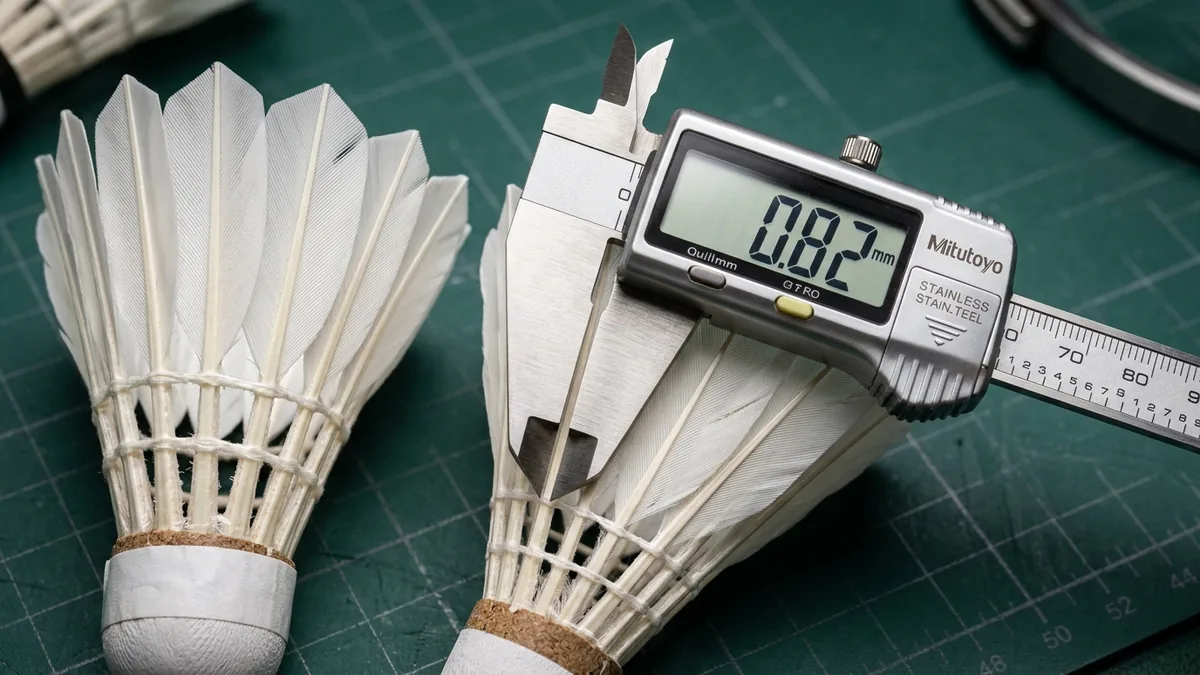
Goose vs duck feather shuttlecocks: anatomy, durability and club cost comparison
Compare goose vs duck feather shuttlecock durability, shaft anatomy, Mulard/Cigu/Teng species differences and cost-per-set across 80 factory models.