
Humpback vs single-side vs full-round feathers: complete shuttlecock vane grading guide
Shuttlecock flight stability and durability depend as much on feather vane geometry as on bird species. Full-round and straight knife feathers offer symmetrical drag for tournament rallies, humpback goose feathers add curved wind-tunnel snap recovery, and single-sided (half-vane) duck feathers cut training cost by using high-strength primary shafts with trimmed inner barbs.
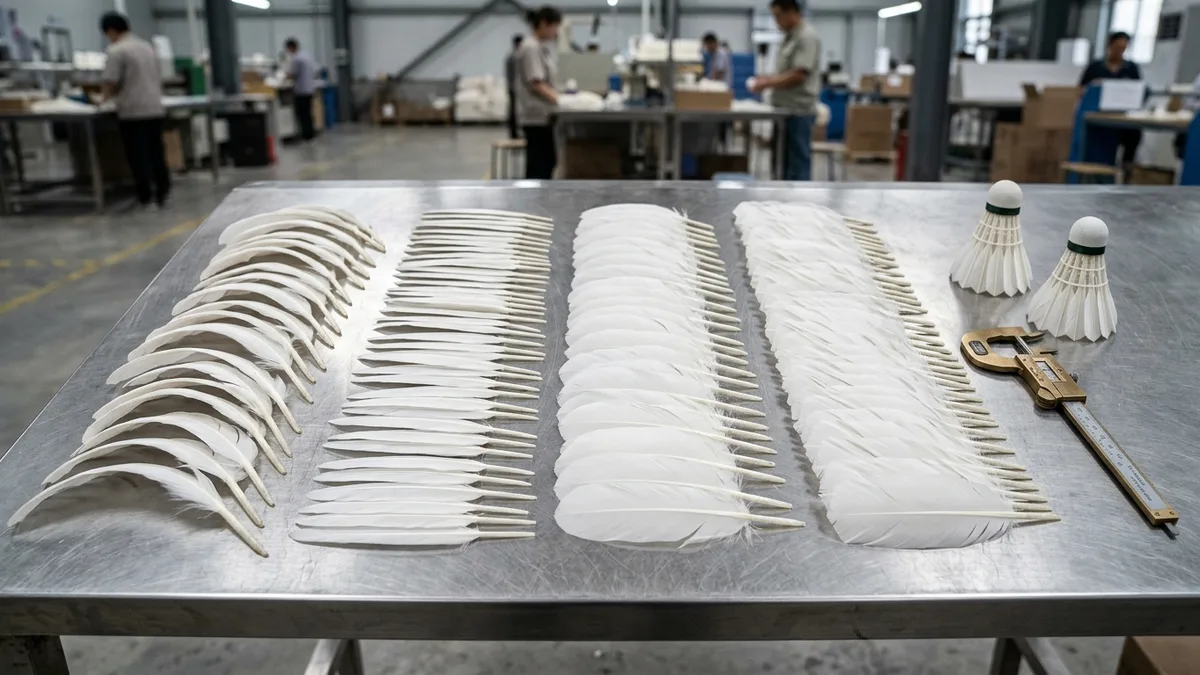
Shuttlecock feather cut & vane shape comparison matrix
How feather geometry changes rotational spin, impact durability, club use case and factory EXW cost tier.
| Feather cut / vane shape | Typical species | Flight trajectory & spin | Rally durability profile | Best B2B use case |
|---|---|---|---|---|
| Full-round (Full Circle) | Goose / Cigu & Mulard duck | Highly stable, even 16-vane drag | Long rally life; resists early fraying | Tournament & competitive league matches |
| Straight thick-stem knife | Goose / Grade 1–2 Cigu duck | Crisp, fast turnover & clean arc | High smash resistance; firm rachis | Pro club matches & hard-hitting doubles |
| Humpback (Arched goose) | Bleached / natural goose | Predictable deceleration at net | Strong arched quill resists clean snap | High-intensity club matches & cold halls |
| Medium / small broad square | Cigu, Teng & water duck | Consistent practice arc; slight drag | Balanced cost per game for drills | Daily club training & academy sessions |
| Single-sided (One-sided) | Teng & Cigu duck Grades 1–3 | Slightly faster drop; steady spin | Firm shaft, lighter inner vane webbing | High-volume club feeding & budget tubes |
How vane symmetry and shaft curvature control shuttlecock flight
When a shuttlecock leaves the strings at high speed, air pressure across the 16 overlapping barbs creates stabilizing torque. Even a 1 mm mismatch in vane width or curvature alters rotation speed.
Full-round vs square-cut feather tips
Full-round vanes retain natural curved outer tips with dense interlocking barbs, creating smooth airflow over the 65–68 mm skirt. Square-cut (large or medium square) feathers are die-trimmed to uniform height from secondary wing positions for cost-effective club practice.
Why humpback goose feathers perform well under heavy smashes
Taken from specific curved wing slots, humpback goose feathers carry a thicker arched rachis. Under steep smash impacts, the curved spine absorbs bending stress instead of cracking straight across the collar line.
Understanding single-sided duck feathers honestly
Single-sided feathers come from outer wing positions where one side of the barb vane is naturally narrow. They look leaner than full-round feathers, yet their hollow quill wall remains stiff enough for reliable multi-rally training at a lower tube price.
How our Jiangshan grading room sorts 16 matched feathers per shuttlecock
Mixing wing sides or blending thick and thin stems inside one shuttlecock causes immediate wobble. Factory sorting separates geometry before drilling begins.
Left-wing and right-wing isolation
Left-wing feathers naturally twist clockwise and right-wing feathers twist counter-clockwise. Our sorting lines keep left and right batches strictly separate so every tube flies with identical rotation.
Optical & manual shaft gauge sorting
Feathers are graded by barb density, whiteness, camber arc and stem diameter before assembly. Straight thick-stem goose feathers go into match models (such as White Goose No.3 and GL-1), while broad duck cuts supply club lines.
Matching vane shape to your buyers
Ask buyers whether they prioritize pristine flight feel (full-round or straight thick goose), winter shaft toughness (humpback goose) or lowest cost per training session (single-sided or small-broad duck).
Catalog models featured in this guide
Compare indicative USD EXW reference pricing per tube, save models to your inquiry list, or request 3 free play-test shuttlecocks.
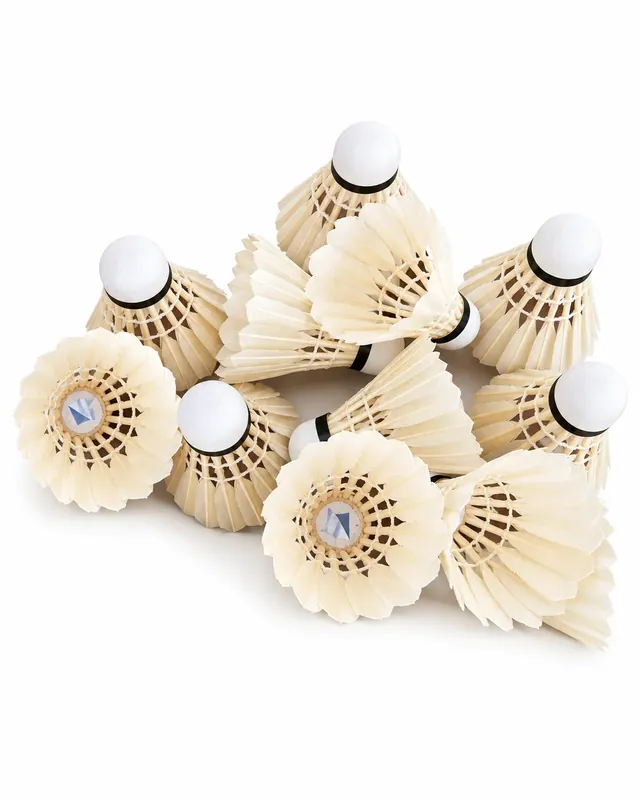
Club & Practice shuttlecock
FEI-BLUE
Goose feather
- Min. order
- 1 tube
- Packing
- 12 pcs / tube
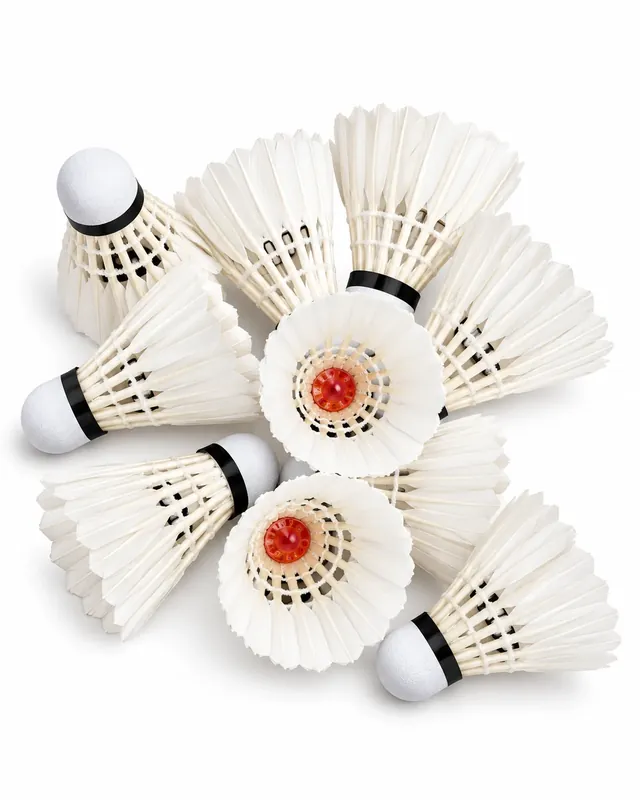
Club & Practice shuttlecock
WHITE GOOSE NO.3
Goose feather
- Min. order
- 1 tube
- Packing
- 12 pcs / tube
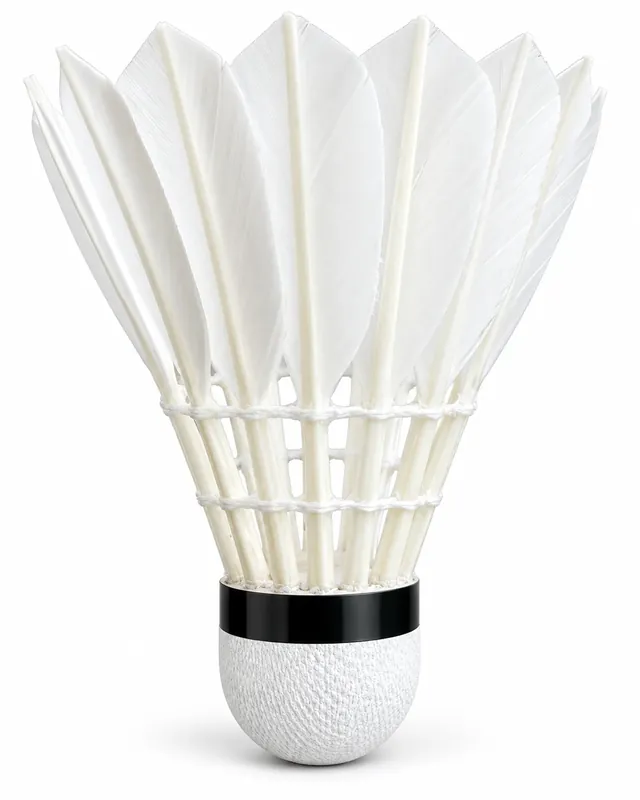
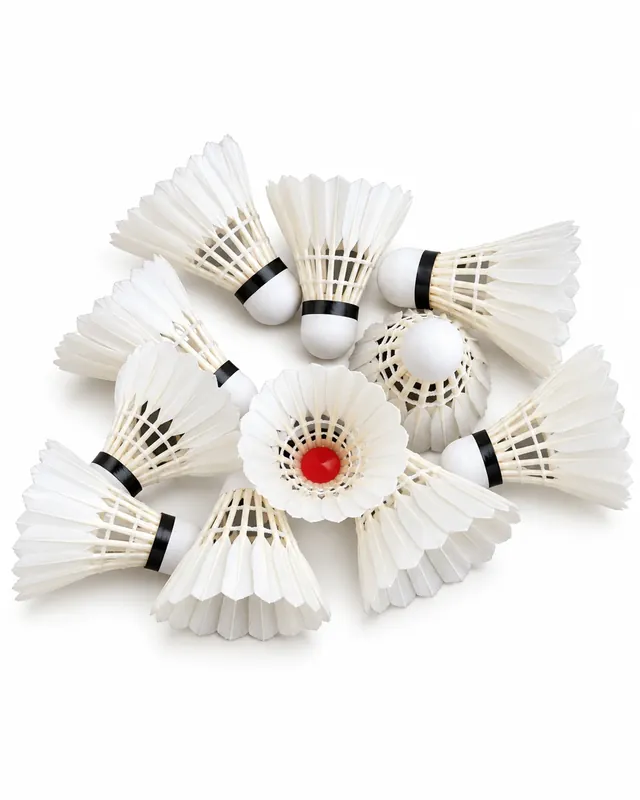
Club & Practice shuttlecock
CIGU NO.2
Duck feather
- Min. order
- 1 tube
- Packing
- 12 pcs / tube
Feather vane shape & grading FAQ
Are humpback goose feathers better than straight goose feathers?
Neither is universally better—straight thick-stem goose feathers deliver the cleanest tournament flight profile, while humpback goose feathers provide extra arched-spine toughness for heavy smashers and cooler halls.
What is a single-sided (one-sided) feather shuttlecock?
A single-sided feather comes from outer wing positions where the inner barb vane is naturally narrower than the outer vane. It lowers material cost while maintaining a sturdy shaft for daily club training.
Why does full-round Cigu duck cost more than standard water duck?
Grade 1–2 full-round Cigu duck feathers have wider, denser symmetrical vanes and thicker quills than thin-shaft water duck, giving flight stability much closer to goose feather models.
Can I request play-test samples comparing different feather cuts?
Yes. You can request three free shuttlecocks in total (the buyer pays courier costs) to compare full-round, humpback, straight goose and single-sided duck models side by side on your own court.
Continue reading related factory guides
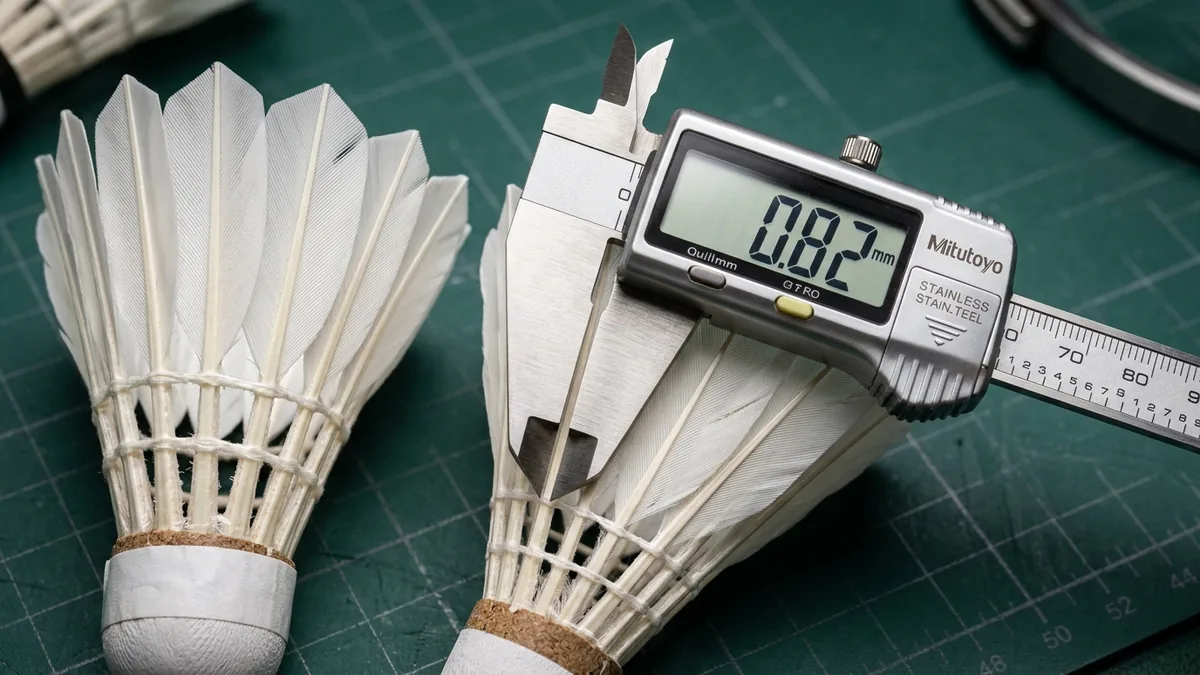
Goose vs duck feather shuttlecocks: anatomy, durability and club cost comparison
Compare goose vs duck feather shuttlecock durability, shaft anatomy, Mulard/Cigu/Teng species differences and cost-per-set across 80 factory models.
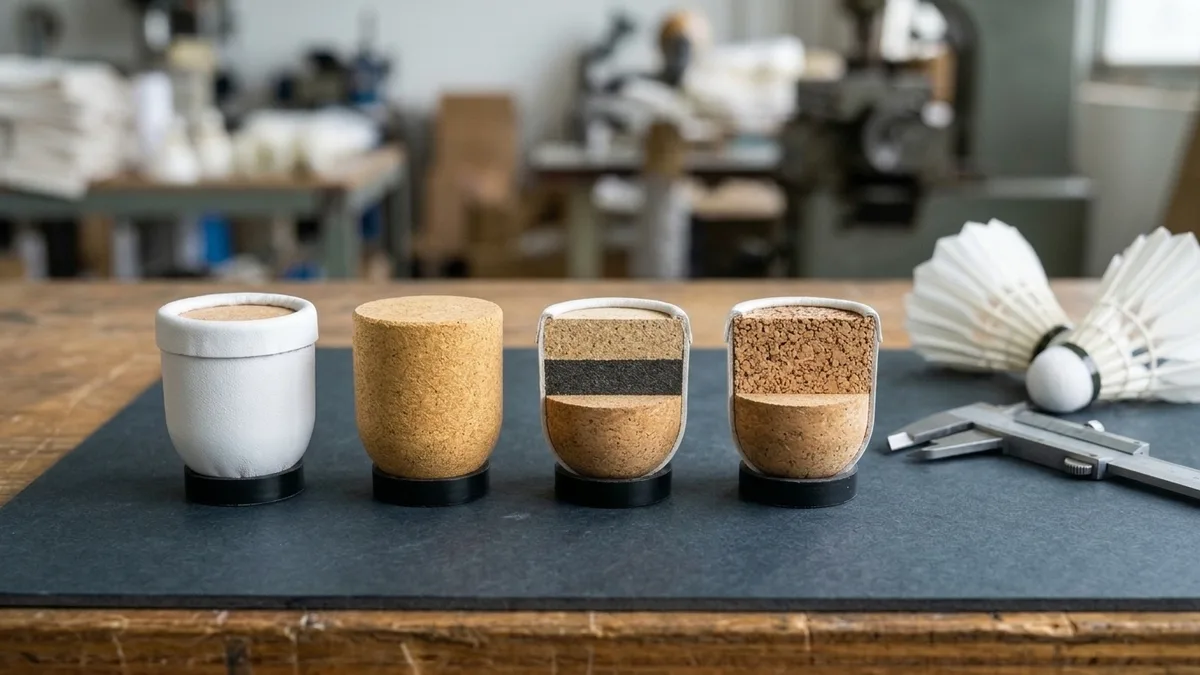
Natural cork vs 3-layer and composite cork shuttlecock heads: buyer engineering guide
Compare pure natural cork, 3-layer fiber cork, 2-layer composite cork and wood-cork shuttlecock heads on rebound feel, cracking resistance and B2B cost.
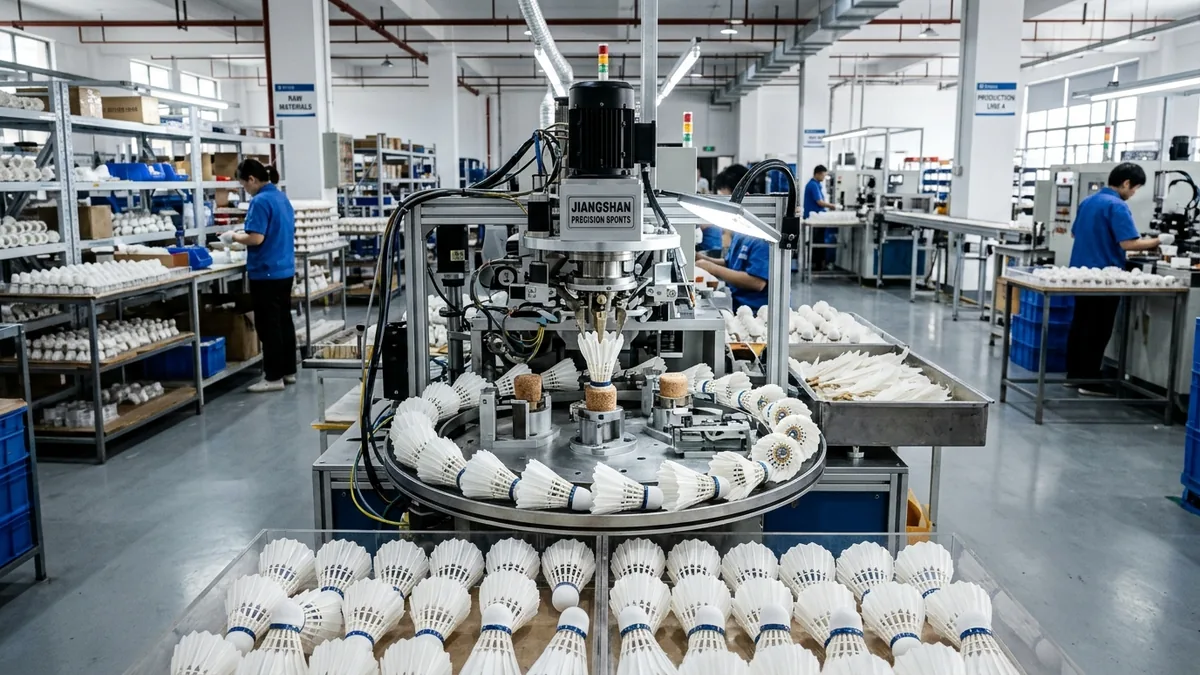
How badminton shuttlecocks are made: 6-stage Jiangshan factory process and QC standards
Inside our Jiangshan shuttlecock factory: see the 6-stage manufacturing process from 16-feather wing sorting and 25.5° cork drilling to flight and speed QC.