
How to evaluate shuttlecock factory samples: blind flight test & 100-point court scorecard
Never place a bulk shuttlecock order based on tube appearance or price sheets alone. Remove tube branding, condition samples at 55%–65% RH for 24 hours, run the underhand baseline speed test into the 530–990 mm landing zone, and score flight spin, recovery speed, acoustic snap and durability across 20 rallies using a blind 100-point rubric.
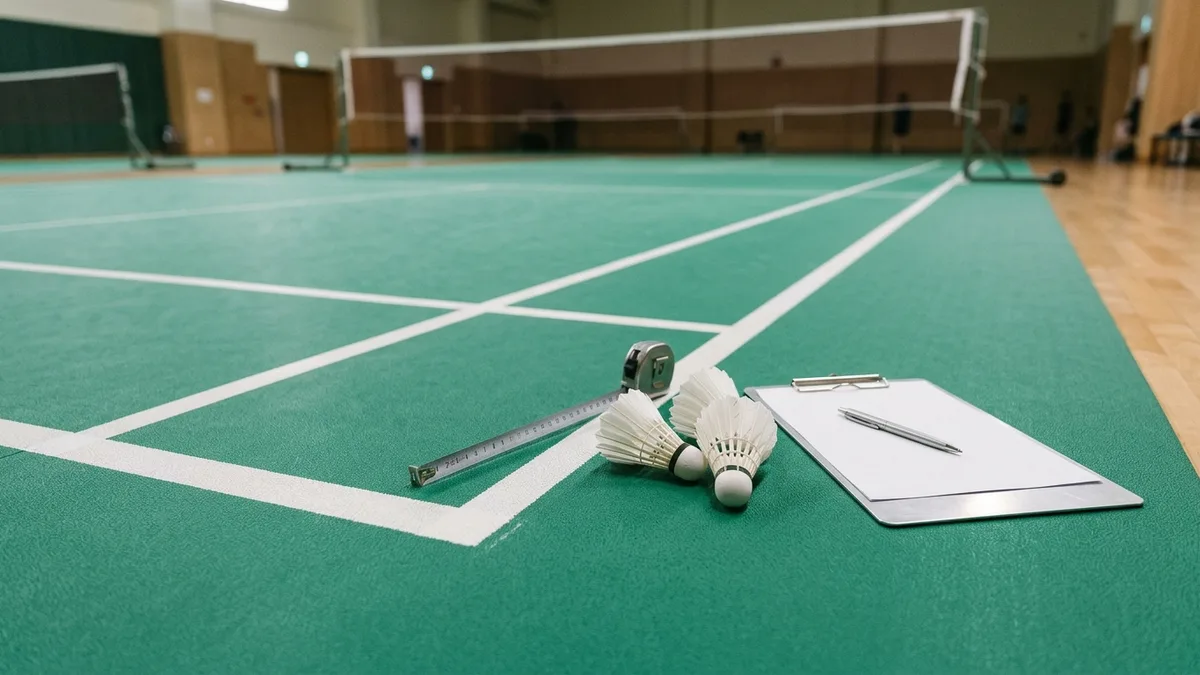
100-point B2B blind shuttlecock sample evaluation scorecard
Structured scoring rubric used by clubs, academies and importers to compare factory samples side by side.
| Test dimension | Weight | How to measure on court | Pass benchmark (match / club) | Red flag to reject |
|---|---|---|---|---|
| Baseline speed landing | 25 pts | Full underhand stroke from back line (5 hits) | Lands 530–990 mm inside far back line | Consistent overshoot or >300 mm spread |
| Mid-flight spin & wobble | 25 pts | 10 high deep clears + flat drives across net | Tight axis spin, zero cork flutter | Visible tail wobble or corking sideways |
| Turnover & net recovery | 15 pts | Fast drive exchanges & tight spinning net drops | Crisp immediate turnover after impact | Sluggish flip or erratic bounce off tape |
| Rally durability (20+ hits) | 25 pts | Competitive doubles rallies & steep smashes | Smooth barb wear; >1 full game (goose) | Clean rachis snap in first 5–8 rallies |
| Cork integrity & weight | 10 pts | 0.01 g scale + check dome after play | 4.74–5.50 g; cork dome stays round | Flattened base, loose glue or quill pullout |
Running the official 530–990 mm baseline landing test accurately
Speed mismatches are the top cause of buyer complaints. A simple five-minute court test before match play separates true speed calibration from hall temperature effects.
Step 1: Measure and tape the 530–990 mm zone
Place two small strips of masking tape inside the opposite back boundary line—one at 530 mm (just inside the doubles long service line at 760 mm) and one at 990 mm—to define the standard landing window.
Step 2: Use one consistent tester and upward contact angle
Have one experienced player strike from directly above the back boundary line with a full underhand stroke aimed parallel to the sideline. Repeat five times per sample to remove stroke variance.
Step 3: Check batch spread across all test shuttles
Even if one shuttle lands inside the zone, wide scatter across three shuttles indicates uneven feather weight or inconsistent skirt diameter (target 58–68 mm).
Inspecting feather failure modes and verifying bulk consistency
How a shuttlecock wears out tells buyers far more than whether it survived a single friendly game.
Healthy fraying vs brittle shaft fracture
Quality goose and Cigu/Mulard duck feathers fray gradually along the outer barbs while keeping stable flight. Sudden clean breaks near the resin collar usually indicate under-humidified storage (<40% RH) or weak thin stems.
Static bench inspection before hitting
Roll each shuttlecock along a flat table to check collar roundness, pinch the skirt lightly to test resin stiffness, and confirm all 16 feather tips align cleanly with zero inward curl.
From 3 free play-test shuttles to 1-tube catalog trials
Start with 3 free shuttlecocks (buyer pays courier costs) to narrow down feather grade and head type, then verify batch stability with a 1-tube catalog minimum order before committing to export cartons.
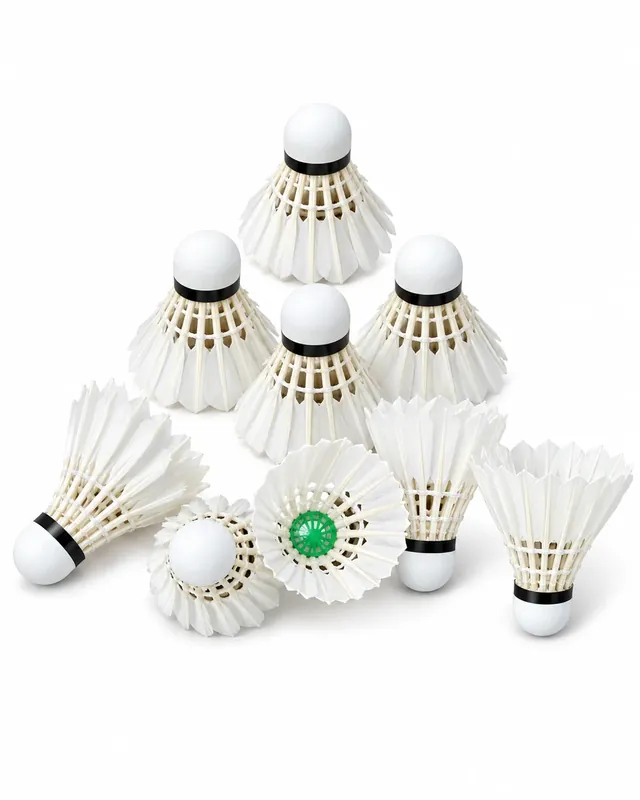
Catalog models featured in this guide
Compare indicative USD EXW reference pricing per tube, save models to your inquiry list, or request 3 free play-test shuttlecocks.
Shuttlecock sample testing & inspection FAQ
What is the standard 530–990 mm badminton shuttlecock speed test?
Hit with a full underhand stroke from above the back boundary line, a properly calibrated shuttlecock must land between 530 mm and 990 mm short of the opposite back boundary line.
Why should buyers run blind sample tests without labels?
Removing tube and cork brand marks prevents psychological bias, ensuring coaches and club players score actual flight consistency, acoustic feel and cost per rally.
How many shuttlecocks do I need for an initial factory sample test?
Our Jiangshan factory provides 3 free shuttlecocks in total for play testing (the buyer pays courier costs), and supports a 1-tube minimum order per model for larger club trials.
Should we humidify factory samples before court testing?
Yes—if your hall is below 45% RH after air-courier transit, condition the sample tube at 55%–65% RH or apply 15–20 seconds of cool mist 24 hours before testing so natural keratin recovers elasticity.
Continue reading related factory guides
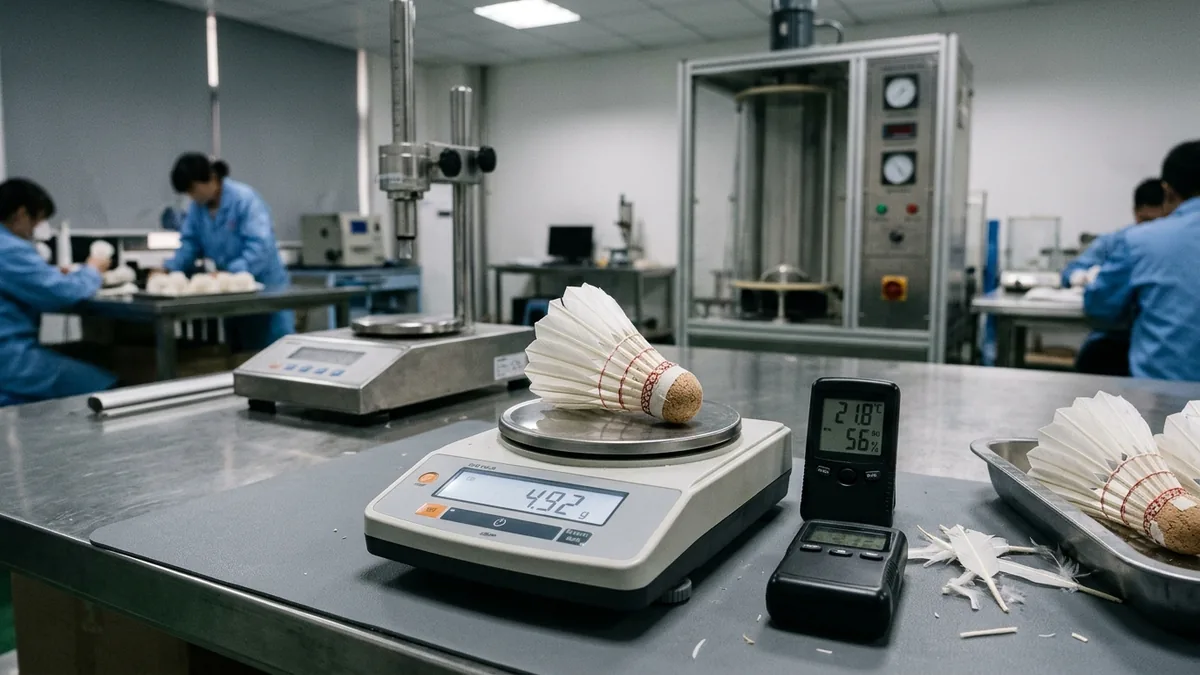
Shuttlecock speed chart (74–79): temperature, altitude and baseline test guide
Use our factory shuttlecock speed chart (74–79) to match court temperature, altitude and air density, plus how to run the BWF baseline landing test.
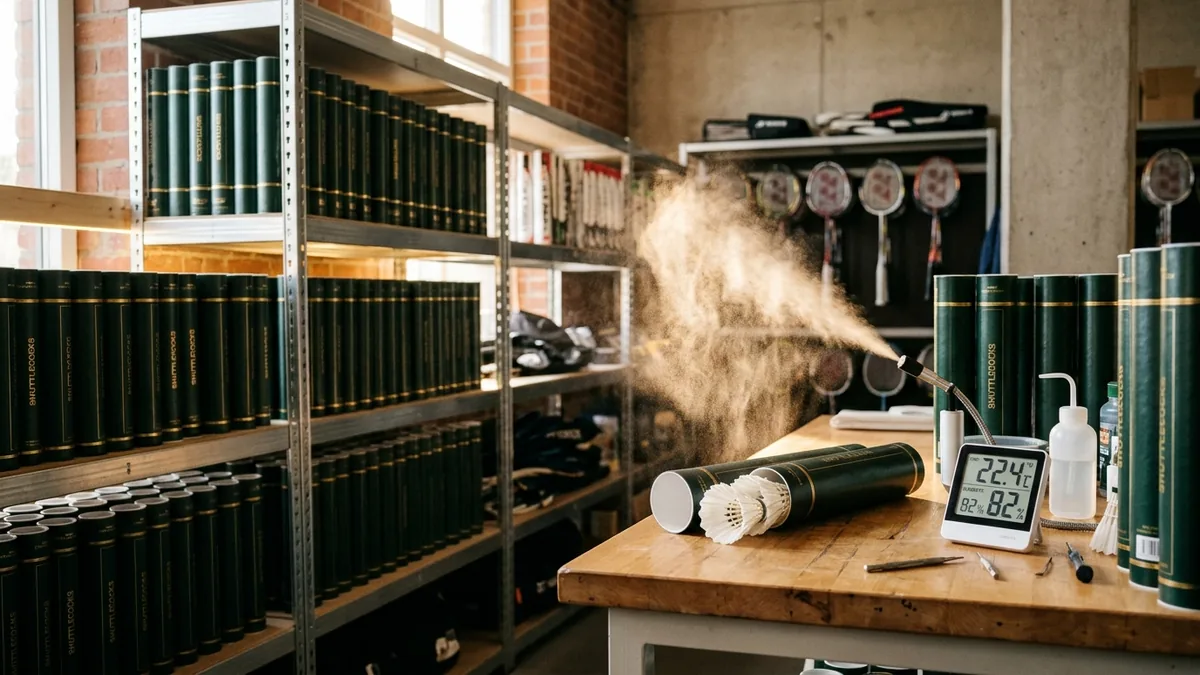
How to store and humidify feather shuttlecocks: 55%–65% RH club & warehouse guide
Learn how to store and humidify goose and duck feather shuttlecocks at 55%–65% RH and 15–25°C to prevent brittle shafts and extend rally durability.
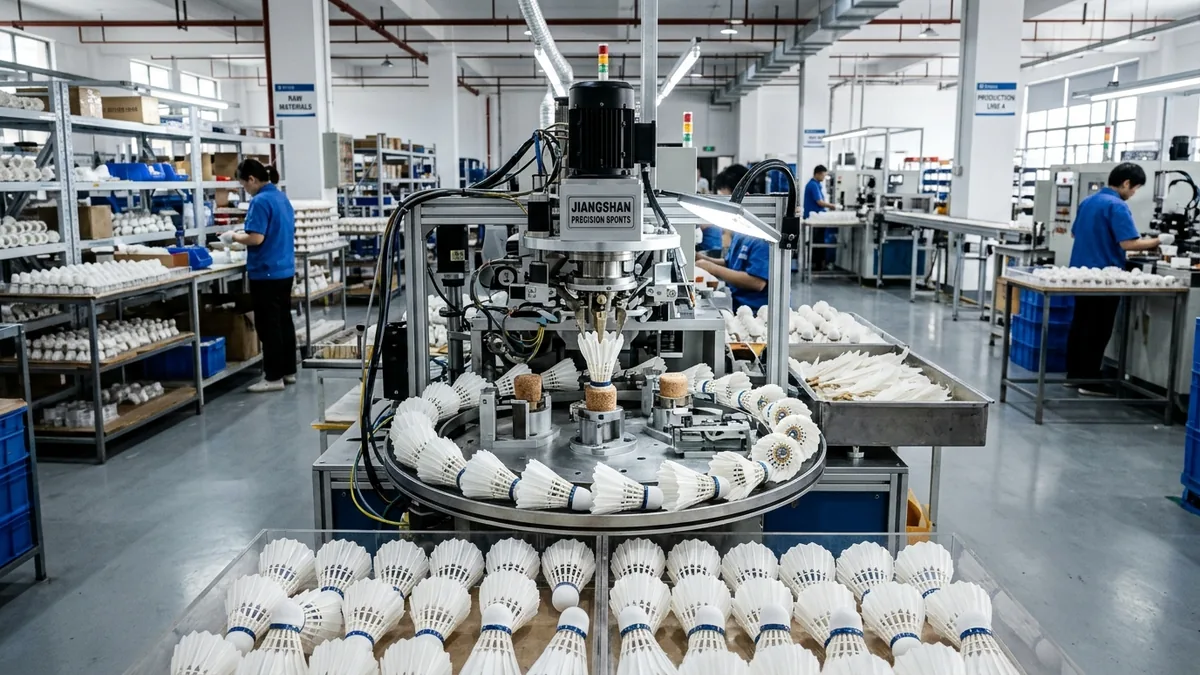
How badminton shuttlecocks are made: 6-stage Jiangshan factory process and QC standards
Inside our Jiangshan shuttlecock factory: see the 6-stage manufacturing process from 16-feather wing sorting and 25.5° cork drilling to flight and speed QC.